Blog: 1999 Japan Training Trip
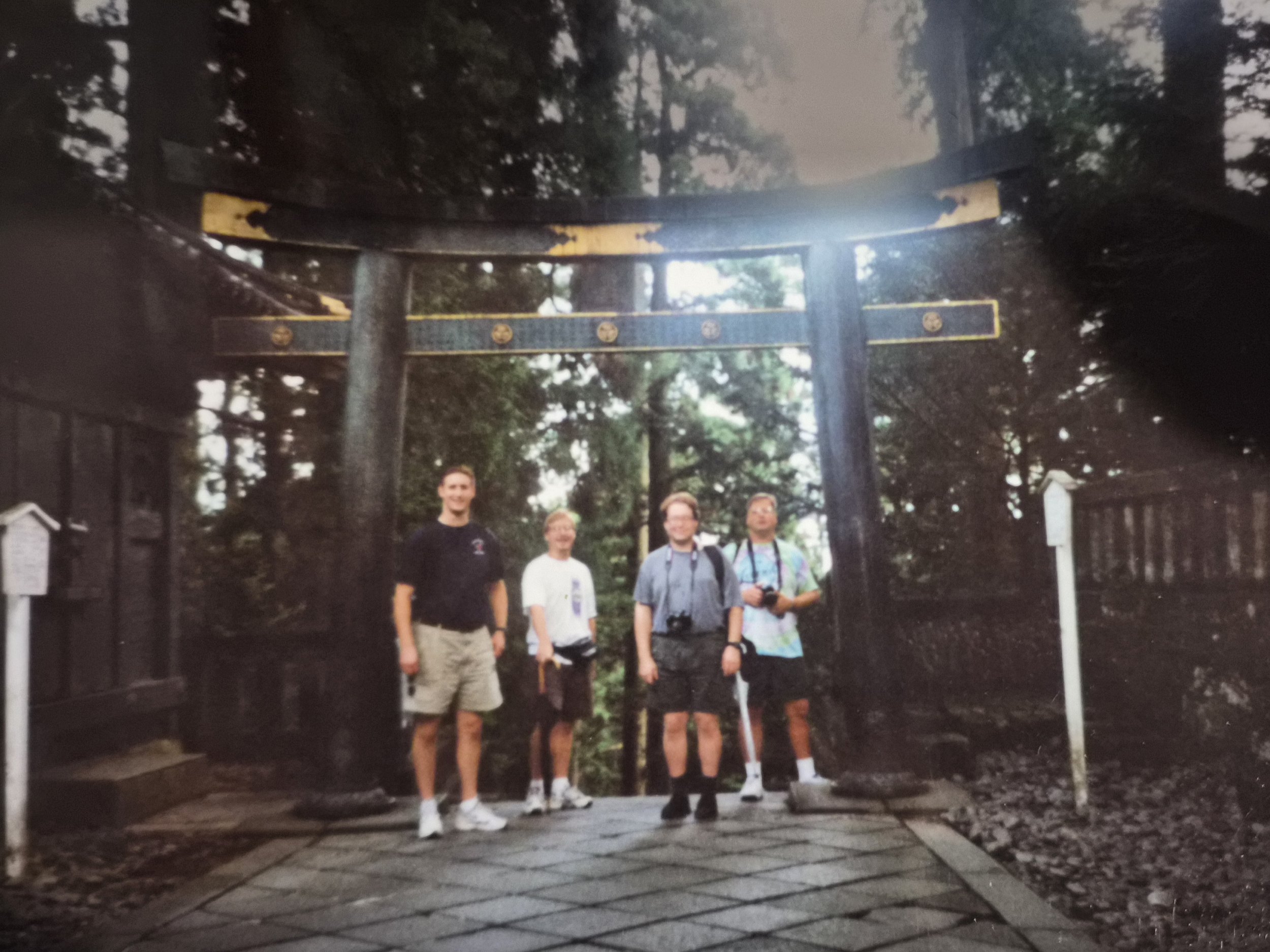
A group of members from the Dayton Bujinkan Dojo visited Japan from August 12-29, 1999, for training and sightseeing. We visited Ueno, Tokyo, Nikko, and Asakusa. Below are blog notes and photos from the trip.

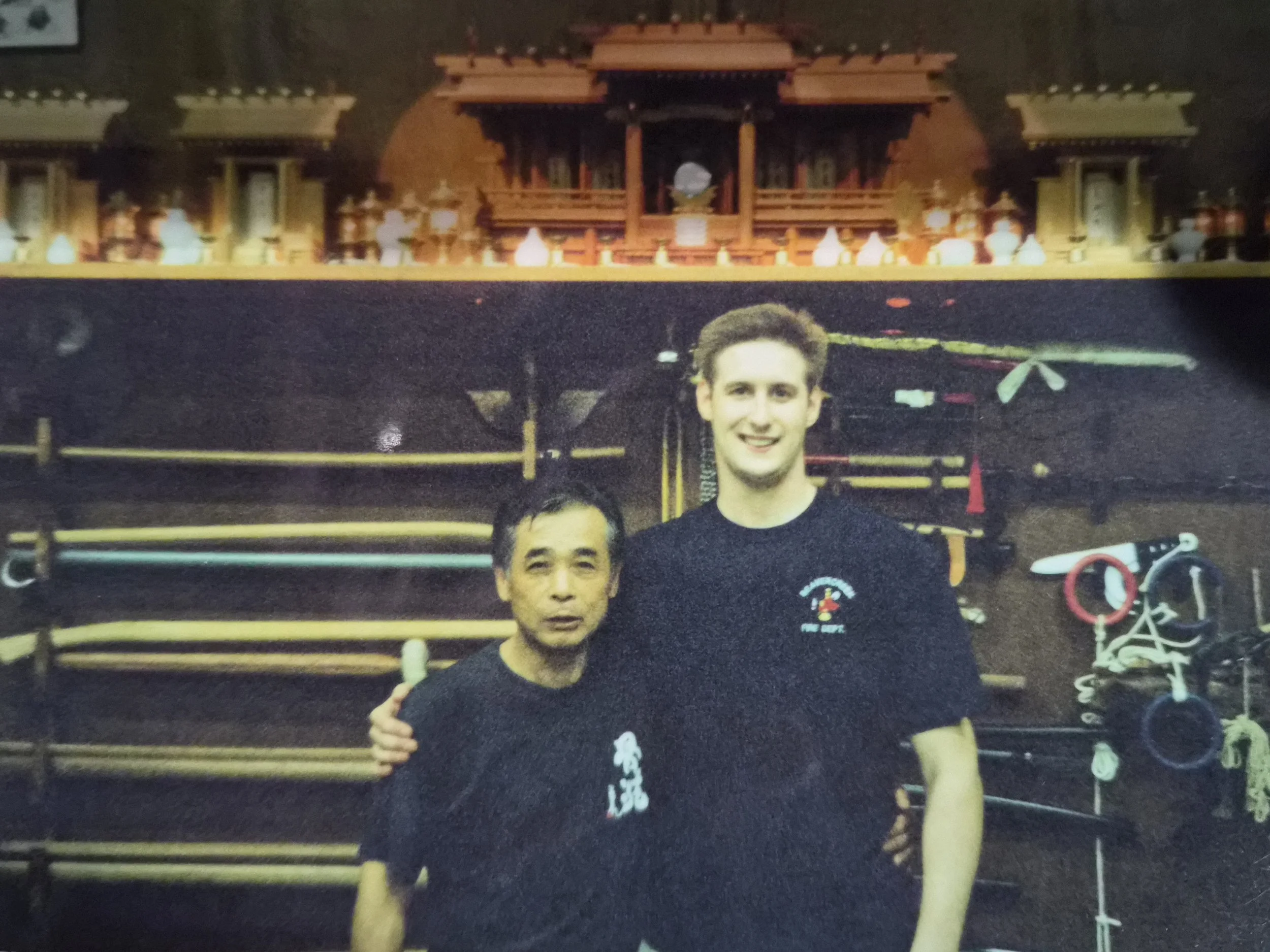


(The following post is a condensed version of Jeff’s full, detailed trip journal.)
The weather was hot and very rainy. Mid-to-high 90s each day with a rain shower or two nearly every day. Nothing ever dries.
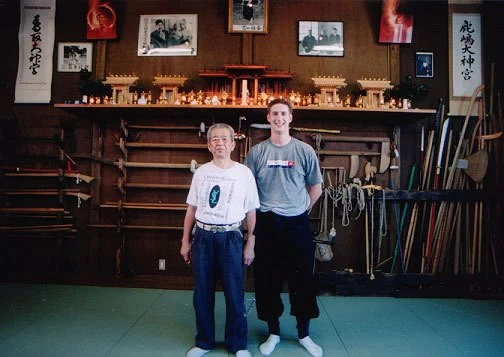
We trained with Hatsumi Soke, Nagato Sensei, Noguchi Sensei, Muramatsu Sensei, and Shiraishi Sensei.
During the first week, Hatsumi Soke was unavailable and his classes were covered by Shiraishi Sensei. In his classes, we primarily focused on ukemi and “being sneaky”.
During Hatsumi Soke classes, Sensei focused mostly on efficient angle manipulation so that the uke didn’t recognize that you were closer to them than they realize. Then a quick strike or arm bar.
Soke showed swordwork and using the blade naturally to parry and strike at the same time. Being zero and not having an idea of what technique to perform was stressed. Others shared that Soke can do this because his basics are so ingrained in his movement. There is no separation. We can only get there if we put in the “mat time” to repetitiously perform the kihon properly.
Jeff O took and passed his godan test under Hatsumi Soke at the hombu. It was at the end of Sunday’s class, the last day in Japan. “I do not recall thinking or hearing anything. Dan said when Soke swung the shinai down I made a funny face and rolled away to the right. When I looked back, Soke was already walking back to the kamidana to put the shinai back. Then he said Ok!”
Do not have a tengu waza, or favorite technique. An enemy can study your favorite technique and figure out how to defeat you. Hide your movement and intent by not committing. The kihon happo are all that are needed.
Nagato Sensei taught taijutsu incorporating the tanto. His techniques involved switching the weapon between hands and migrating from forward to reverse grip.
Nagato Sensei showed many ways to perform take ori. This was from a grab punch attack. Stepping under the arm after breaking the wrist by kneeling on the foot to create a distraction was shown multiple times.
Nagato Sensei showed how to take a take ori from a grab and perform ate nage while still keeping the wristlock on. If the lock releases too early, the uke can escape.
Nagato Sensei stressed that your taijutsu should move in a way that your back stays straight. If the back bends during a technique, the opponent can beat you.
Muramatsu Sensei had us focus on ganseki nage and aligning the body properly during the throw. He stressed keeping the elbows down and in to avoid a counter. He showed us ways to transition from a resisting partner when applying ganseki nage to musha dori and ura gyaku. Dropping our weight down during the transition was a key focus. Core forms of ganseki nage were taught - nage, otoshi, oshi, osae, etc - plus many variations. More than ten versions were explored.
Muramatsu Sensei taught kata from the Shinden Fudo Ryu Jutaijutsu Shoden no kaki densho. His students had been practicing these forms as a focus for 3+ months. We were very bad at them. It was the first time seeing them.
Muramatsu Sensei stressed not staying on the ground. If you find yourself on the ground, control and get free so that you can get up and get to your weapons. Staying on the ground is dangerous because of multiple attacker scenarios common in historic events. If rules apply and it’s 1:1, then you have time, but not normally in historical or modern battles.