Blog: 2000 Japan Training Trip
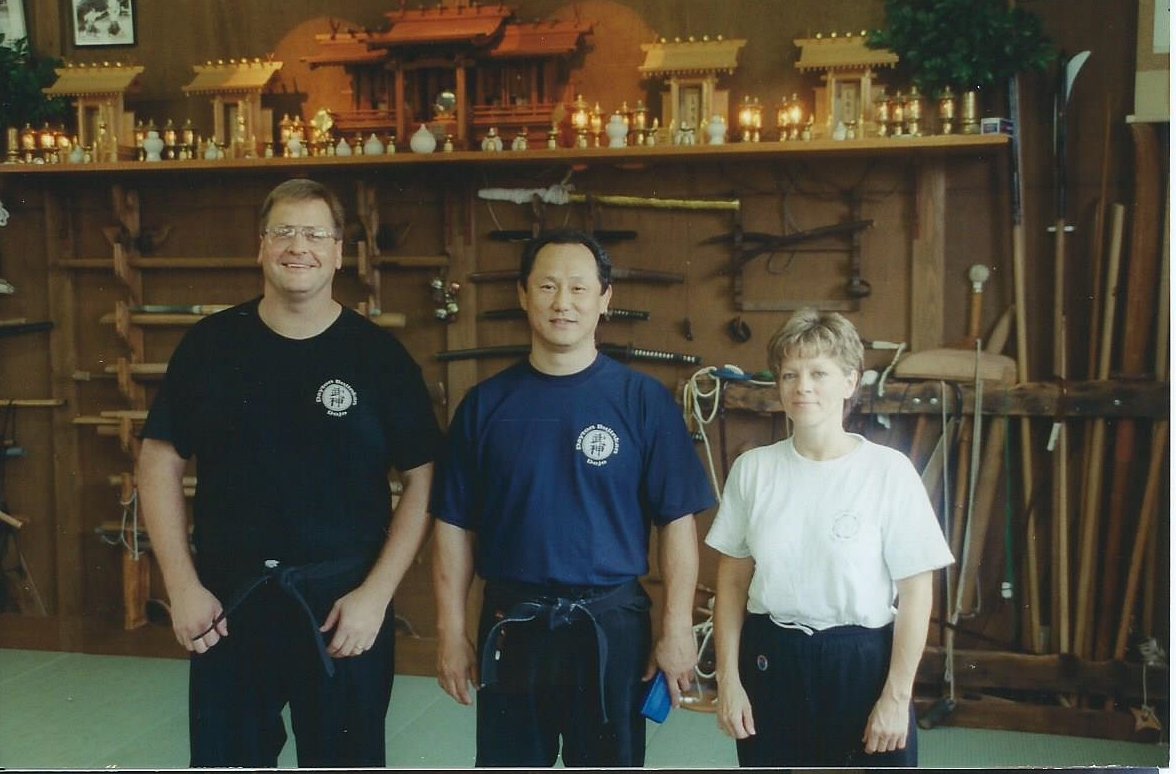
From October 6-22, 2000, a group of Dayton Bujinkan Dojo members visited Japan for training and sightseeing. While there, they trained with Hatsumi Soke, Nagato Sensei, and Noguchi Sensei. Below are blog notes and a few photos from the trip.



(The following post is a condensed version of Jeff’s full, detailed trip journal.)
Soke taught from the theme of “koppo”. Sensei mentioned leaving the techniques behind, working from the void, and not having any intention when applying taijutsu. He spoke about being in the zero, or in the now, not thinking about getting a technique.
Soke said this is the first time as a teacher he has taught this kind of koppo, and only now, after all these years, has he come to realize what koppo is from the teachings of Takamatsu Sensei.
Soke spoke about having only good people train in the Bujinkan. It was our responsibility to make sure of this. The bad people with criminal records, who do drugs, or are involved in crime, are not allowed to train.
In each of Soke’s classes, he spoke about Amatsu Tatara Bumon (天津鑪武門) and the four stages (birth, growth, sickness, death)
Soke said not to try to become a martial artist, just train in the martial art. If you try to become a martial artist, you will become worse in taijutsu.
Soke will be 72 next year, the same age Takamatsu Sensei was when he began training under him. He feels now, at 72, he can teach and deliver the art in a way as Takamatsu Sensei did.
Soke stressed to train safely, with awareness. Not for fighting, but for life. If you feel tired or thirsty, you should break for these things. Sensei said to train softly, but still train.
Soke taught Koppojutsu from Koto Ryu. He said it could be called Koto Ryu Ninpo, because some of the techniques made you disappear in front of the attacker.
Soke said Koppojutsu was the feeling, backbone of the Bujinkan. This is the focus for this year. Sensei said the 2001 focus would be koshijutsu (points of striking and also another “essence” of Taijutsu).
Soke made it very clear that his high-ranking students have excellent technique, but if they are unable to hide their feeling and movement, they are as good as dead. He used a 20-year student to show this example. The shihan was unable to hide his movement, and his uke could therefore change the angle of his cut and strike him.
In Nagato Sensei’s classes, he said that we should practice a technique on just one side. Once it is mastered on one side, the other side will pick it up naturally. A student asked ”I have a technique down really well on one side, but I can not do it well on the other”. Nagato said, “Then you don’t have it down as well as you thought.”
Noguchi Sensei explained Seigan no Kamae to us. He said migi seigan was with a closed fist, slightly aggressive. Hidari seigan was like ichimonji no kamae, leaning back. He explained Bobi no kamae as a kamae where all of your energy gets put into the fist. Your feet can be angled 90 degrees, or just like a tight shizen no kamae. A constant movement in Bobi no kamae is to make your fist look very big by placing it near their face and drawing it forward toward them as you do your next strike.