Blog: 2025 Japan Training Trip
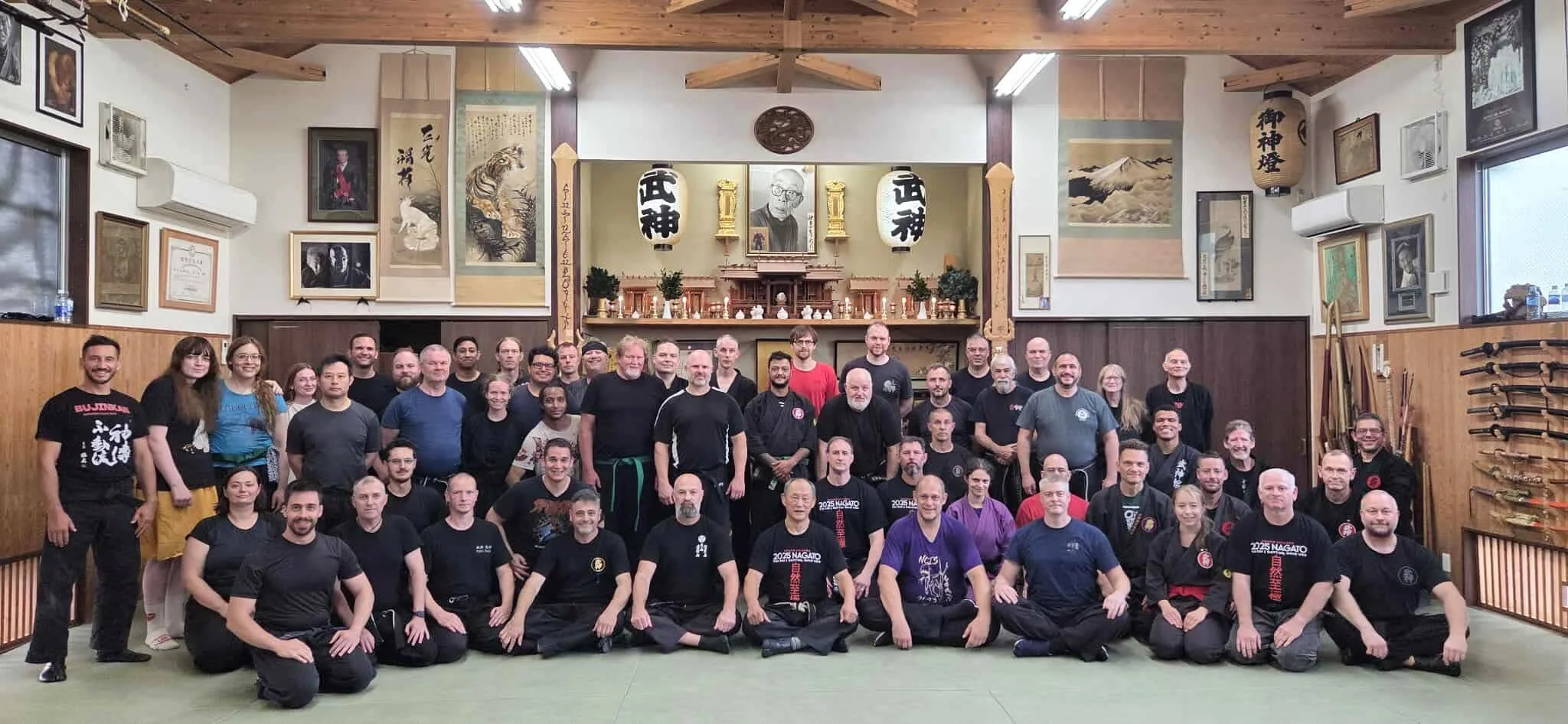
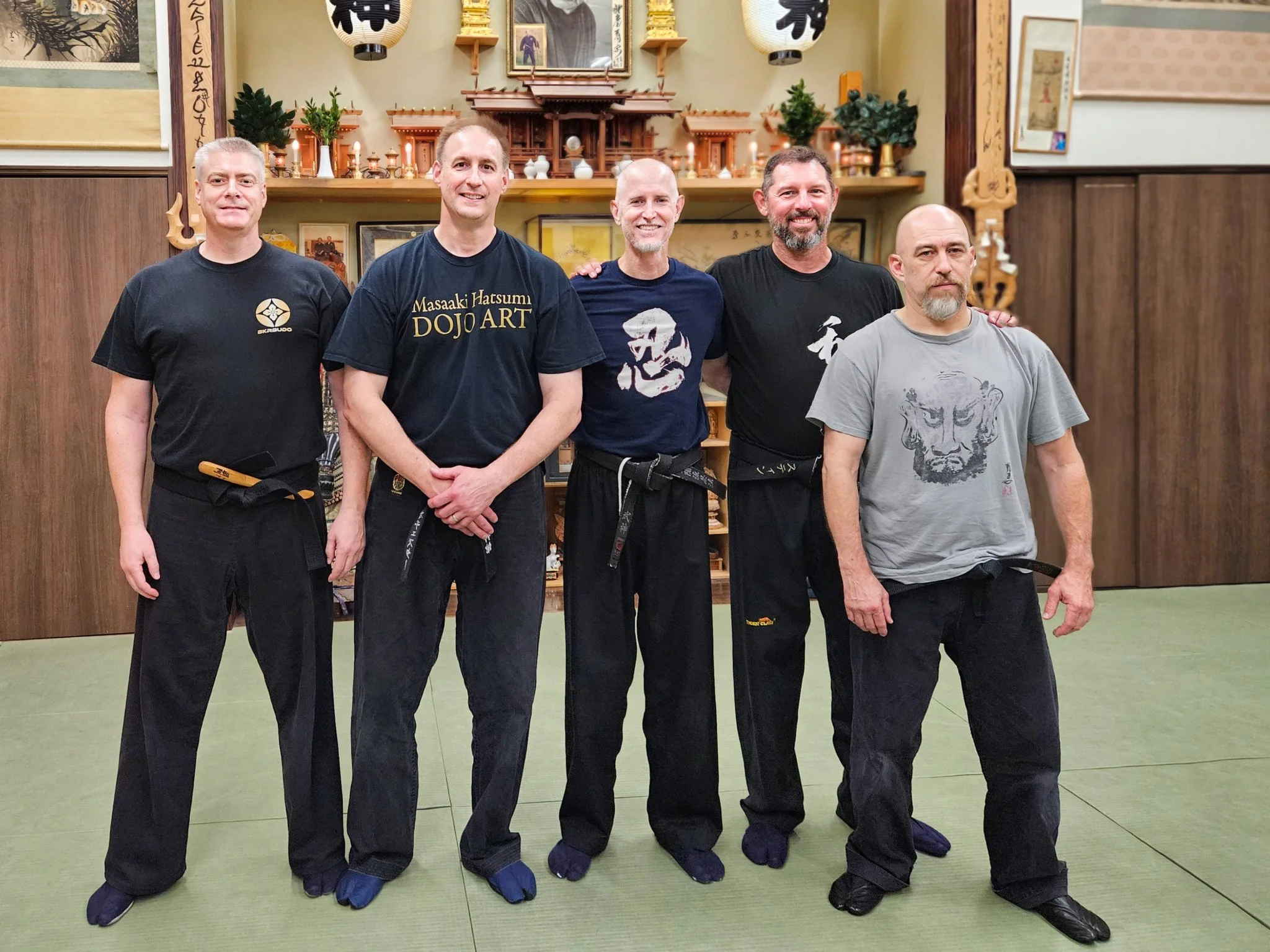
Members from the Dayton Bujinkan Dojo visited Japan to train with Nagato Daishihan, Noguchi Daishihan, Someya Daishihan, and Paul Masse Daishihan from September 26 to October 5, 2025.
Images from training and sightseeing are available at https://www.daytonbujinkan.com/photo-gallery-ii/2025japantrip.
(The following post is a condensed version of Jeff’s full, detailed trip journal.)
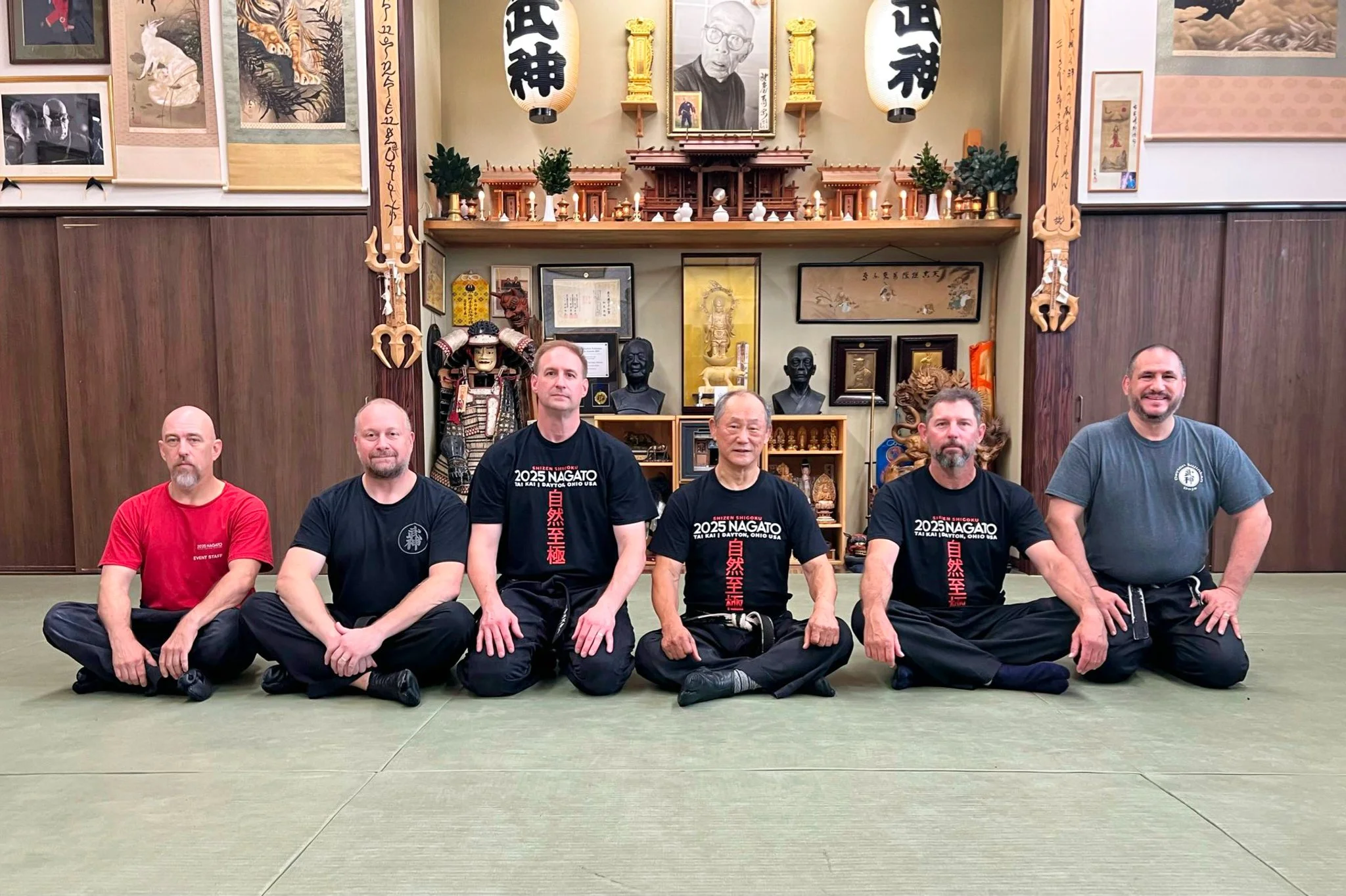
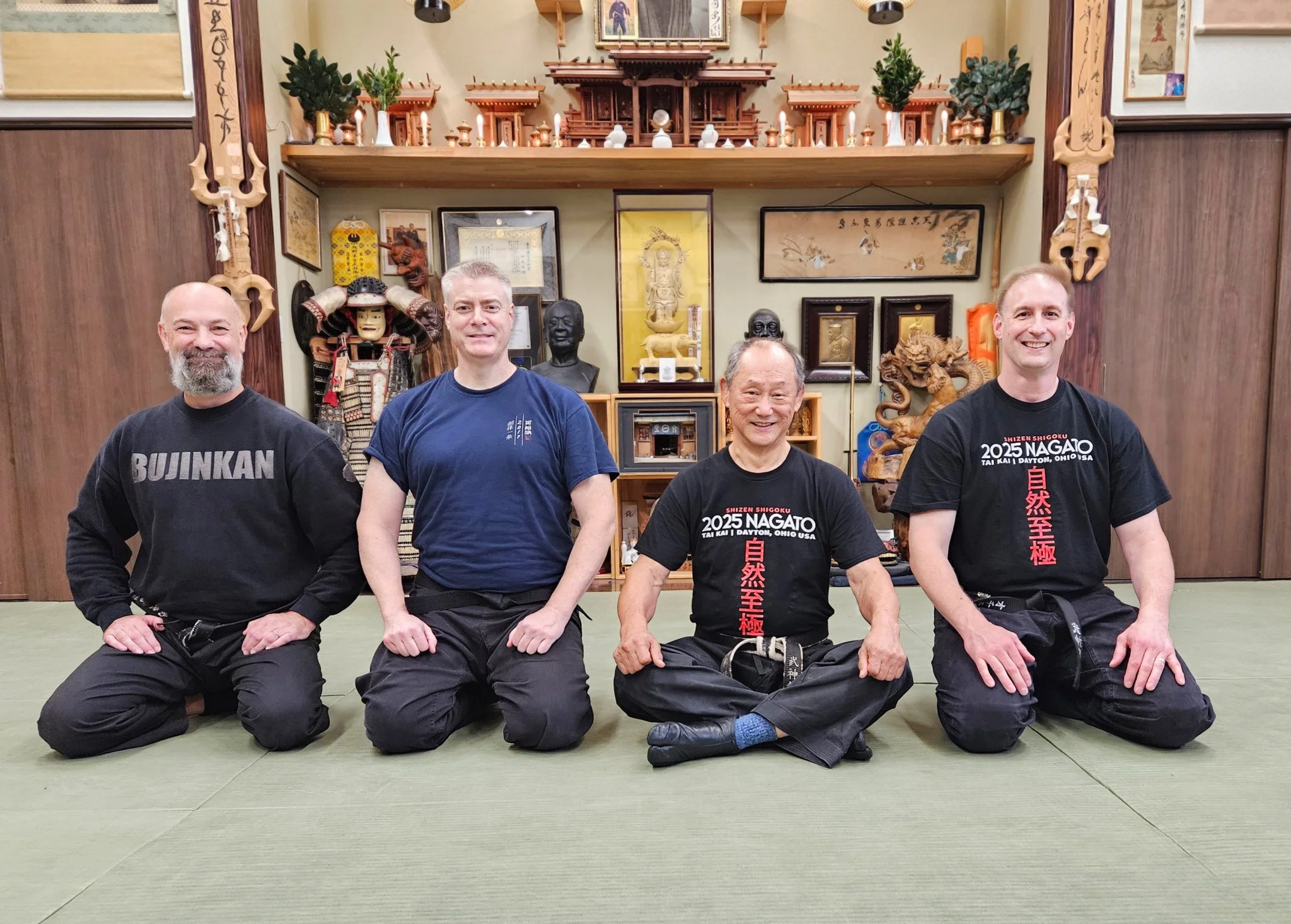
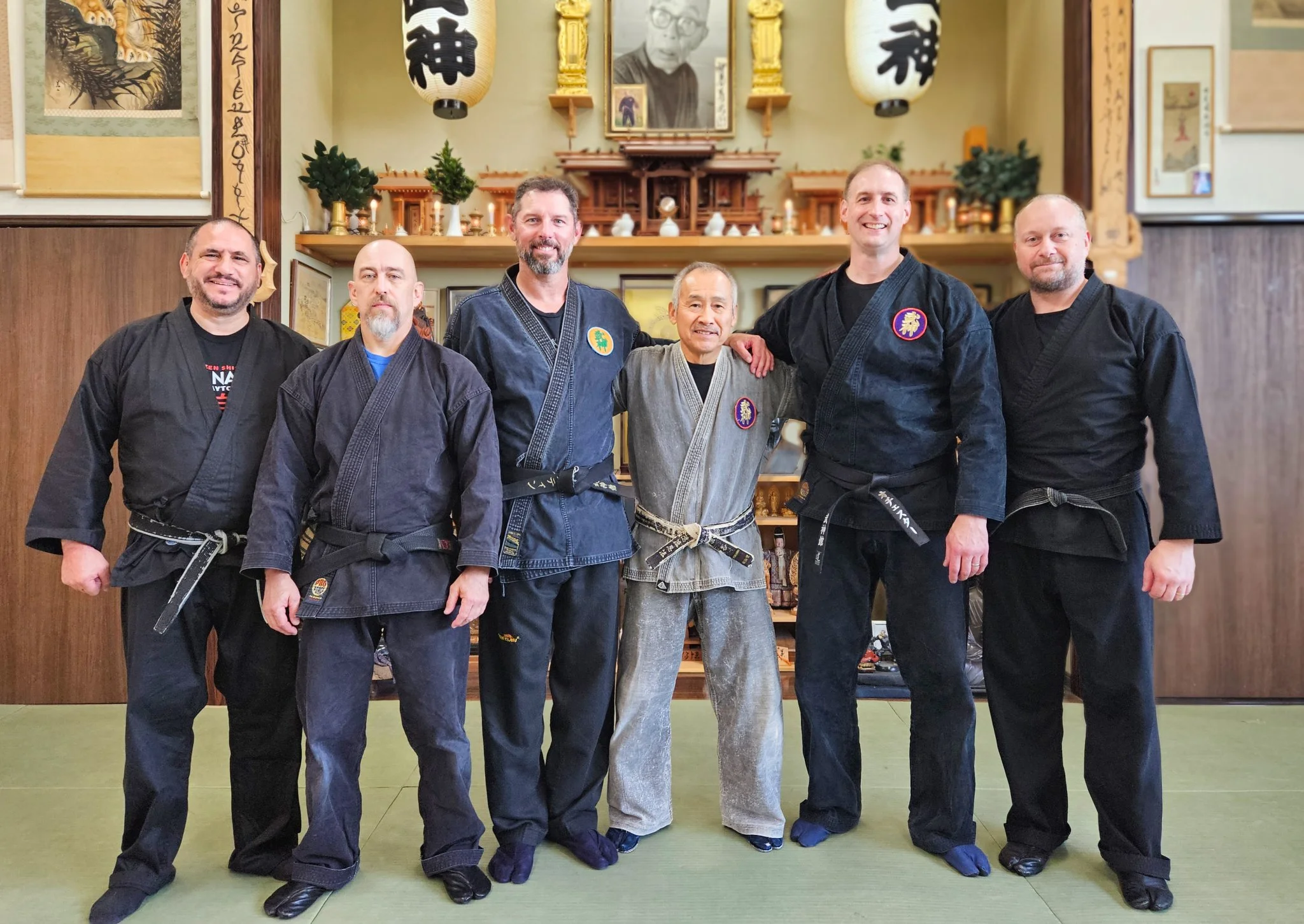
From September 26 to October 5, 2025, five practitioners from the Dayton Bujinkan Dojo embarked on a training trip to Japan. We trained with Nagato Sensei, Noguchi Sensei, Someya Sensei, and Paul Masse.
We connected with friends like Craig Olson (NC), Duncan Stewart (Tasmania), Zoran Radakovic (Austria), Andrius Zaidovas (Lithuania), and numerous groups traveling from Colorado, Idaho, Utah, Michigan, Virginia, Spain, Brazil, and France.
Someya Sensei had us work through Kasumi Dori, Do Gaeshi, and Ujaku before transitioning the class to focus on Kukishinden sword work and kamae. Sensei highlighted connections between schools, noting the concept of "trap[ping] their arms with your leg [movement] like the Shinden Fudo Ryu",
For one kata, Someya Sensei also gave us a specific practice method: to drill the demonstrated kata in three variations: from fudoza using only the hands, from fudoza using only the legs, and finally, standing up.
Someya Sensei observed during one session that many Bujinkan practitioners seem to value gaman, the spirit of perseverance through suffering. He proposed a vital shift: we need to change how we view pain, especially when dealing with injury. Prioritize self-care and physical well-being, emphasizing that maintaining your body's health is essential for long-term training as you get older.
The theme of Kajō chikusei (花情竹性) was emphasized, reminding us to embody two opposing qualities: gentleness like a flower and straightness like bamboo. This principle is directly reflected in the kata: while some moments demand direct, unyielding movement, other times require gentleness and an openness that creates new opportunities and possibilities.
Someya Sensei frequently stressed that every set of kata includes standard variations, or henka. He taught that a complete understanding of the kata's lessons only comes from knowing both the formal version and its various henka.
Someya Sensei dedicated time to reviewing and teaching kata based on the specialized kamae (postures) of both Togakure Ryu Biken and Kukishin Happo Biken forms. He explained the unique posture of Totoku Hyoshi no Kamae. Further instruction covered other distinct aspects of these kamae, including methods for pivoting to hide the blade's length, proper execution of noto (sheathing) and nuku (drawing), and effective techniques for throwing blades.
Someya Sensei's closing advice was a reminder to train under qualified teachers. He pointed out that since we had all invested the effort and expense to travel to Japan for high-level instruction, we owe it to ourselves to continue that pursuit by avoiding poor-quality training.
Noguchi Sensei is now 82. He recently returned from a Tai Kai in Dublin, Ireland, which drew more than 150 attendees. Sensei was visibly proud as he showed a group picture from the well-attended event.
Noguchi Sensei opened his first session by acknowledging that we had traveled great distances to train, assuring us he would do his best to teach the techniques as he learned them from Sōke. He proceeded to cover many forms from the Gikan Ryū, an esoteric ryū-ha within the Bujinkan known for having few named kata and whose techniques are rarely shared.
During a training session, Noguchi Sensei instructed us to step into the opponent with a strong, purposeful intent the very moment their attack begins, effectively disrupting their flow. To underscore this psychological advantage, Sensei stressed the need to step in so aggressively that you scare the opponent without actually striking them. He concluded by stating, "The spirit [of it] matters," citing the example of Takamatsu Sensei's ability to show strength through intent.
Noguchi Sensei wore kakute (角手) spiked rings on his fingers during one session, demonstrating how to use them to both strike and seize an opponent’s punch.
Noguchi Sensei’s sessions included Takagi Yoshin Ryū kata with a wide array of henka. Noguchi Sensei stressed the importance of successful application, cautioning that otherwise, the opponent will escape. His solution involved disrupting the opponent's balance by rocking them, followed immediately by applying two techniques at once.
In Paul Masse’s classes, he had arranged for a high school student team to video-log his classes. Paul focused on how Sōke used to receive an opponent’s attack with the elbow, using the combined concepts of kukan (空間) and kyojitsu (虚実).
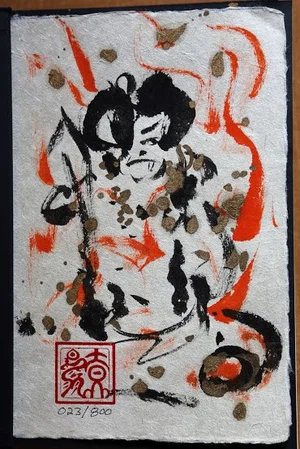
About halfway through class, Paul took a break for artwork. His drawings and calligraphy stand out and reminded us of the days when Hatsumi Soke created artwork for students during class.
Nagato Sensei is 78 years old. His classes averaged 50 students.
Nagato Sensei often repeats the memorable phrase, "make it look cool." The "cool-factor" is about smoothness: ensuring your movement flows seamlessly from one technique to the next.
Nagato Sensei shared a philosophy rooted in accepting things as they are, acknowledging that change is the only constant. Avoid troublemakers and those with "bad luck" or who gossip, and instead stay close to positive people and those with good fortune. “Just keep going.” Sensei emphasized not letting things bother us, reminding us that we can only control our own actions.
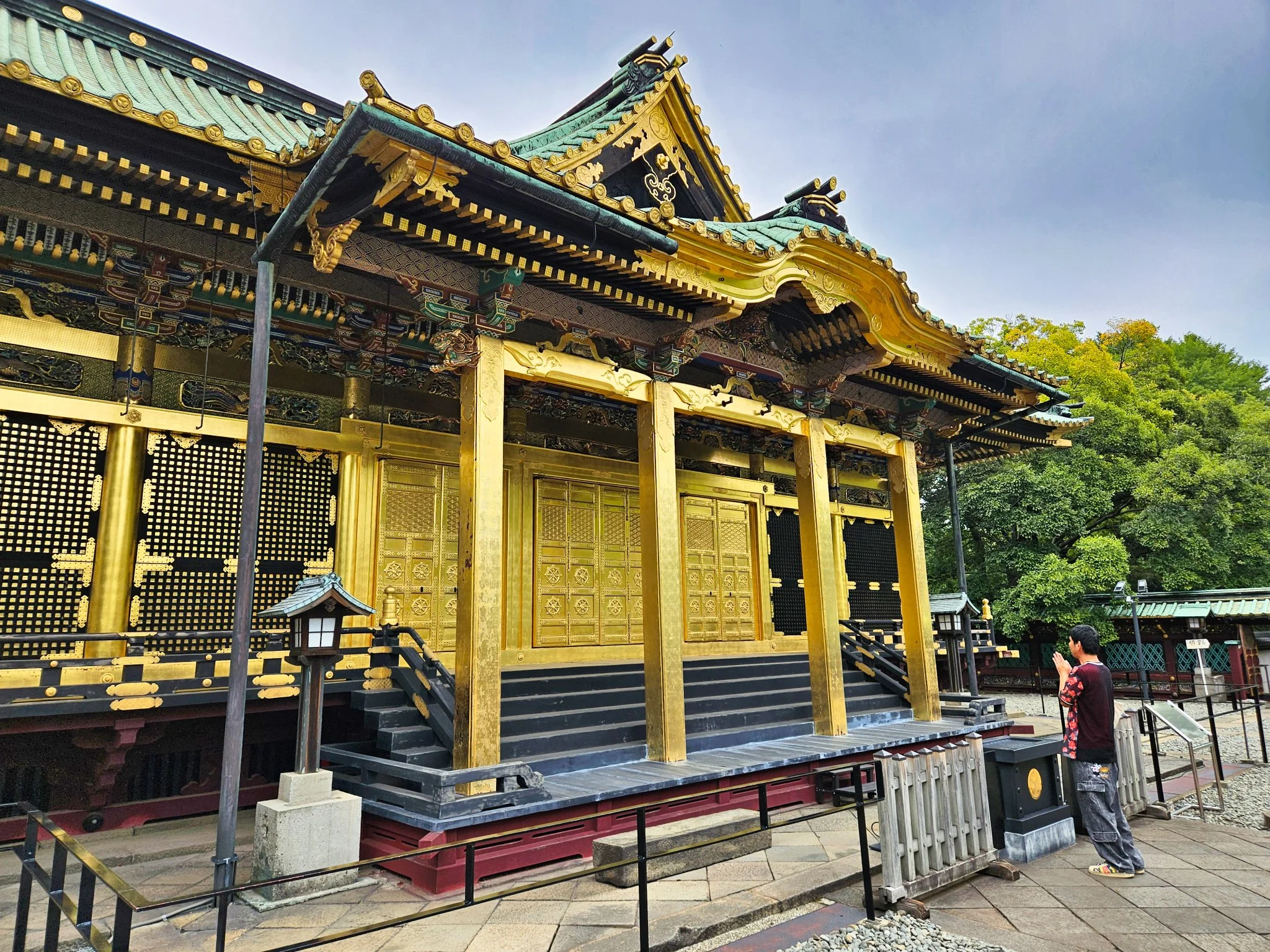
In August of this year, we unexpectedly lost our friend and student, Michael Jervis. While in Japan, we chose to honor his life and passing by visiting the Ueno Tōshōgū Shrine (上野東照宮). Built in 1627, this shrine is dedicated to Tokugawa Ieyasu, the great warrior and founder of the Tokugawa shogunate, celebrating the peace and unification he brought to Japan. As Michael was both a former soldier and a peaceful soul, this shrine served as a fitting place to remember him. Our visit included a tour of the inner shrine, a protected Japanese cultural treasure distinguished by its stunning structure, featuring pillars and doors covered in gold foil. Following the tour, we hung an ema (絵馬, 'picture-horse’) wooden plaque, which we signed in Michael’s memory. We placed the plaque in a special section of the shrine near the ancient lanterns. Later this year, the shrine caretakers will perform ema kuyō, a ritual burning ceremony that releases all the worshippers’ wishes and prayers to the kami (spirits) of the shrine.
During discussions with local residents, insights into Hatsumi Soke’s teachings were shared. Hatsumi Sōke's approach to teaching Budo Taijutsu and sharing his artwork is fundamentally gnostic, not a regimented, scholarly, or purely historical methodology. The academic/scholarly approach seeks knowledge through external, categorical processes: analyzing history, cataloging techniques (kata collecting), and breaking skill attainment into measurable steps. This model is focused on the acquisition of facts about a subject. The gnostic approach used by Hatsumi Soke, conversely, bypasses external structures and emphasizes direct, personal, and intuitive understanding and experiences. This model is often seen in the way monks teach how to obtain enlightenment (satori). It stresses that both time and feeling (kimochi de) are important, allowing lessons to simmer and become an inseparable part of you, transforming the practitioner rather than merely adding to their knowledge base. The goal isn't just to know the technique, but to become the technique.
During another conversation, the future-state of Bujinkan Sōkeship and lineage (ryu-ha) were a topic of discussion. The concept of Sōkeship often proves challenging for non-Japanese practitioners to fully grasp. The mindset that focuses on "who’s next" is overly linear and misses the point. Instead, a Sōke is named to carry the next generation forward, with their primary focus not solely resting on maintaining historical accuracy or accountability.
During a conversation with a long-time Nagato Sensei student, he discussed the crucial idea of being in the right place at the right time. Recognizing where you should be and when to act are essential elements of training. As Sōke has written in his calligraphy, "Do not rush into battles; you will create openings and take losses." At its core, the message is don't rush. This principle applies universally: to your participation in the Bujinkan community, your pace in training, and your conduct afterward. Avoid being the person who rushes to sit next to a teacher for a photo op or tries to appear important. Instead, allow such opportunities to occur naturally.
Another discussion was around awareness (意識, ishiki). Developing the skill to “read the room” and maintain situational awareness is critical in training. There were examples of poor mental and physical ukemi, such as groups training with an intensity far exceeding the teacher's demonstration, performing ground taijutsu when none was shown, or continuing to finish a technique after the instructor had started teaching again. Related, serving as the uke for your teacher is a critical role that requires you to punch true and in harmony with their demonstration so they can teach effectively. Occasionally, due to nerves, anxiety, or inexperience, an uke fails to harmonize, striking too hard, too fast, or simply ineffectively. Developing the necessary mind and eyes to instantly see and correct your own flaws in that moment is a vital skill that only comes through diligent training and must be thoroughly understood.
During the visit to the Bujinkan administration office, Mr. Niigata shared a construction drawing confirming work is planned to start in early spring of 2026 toward a new facility. The current office (Bujinden building) and Sōke's adjacent home will be razed and replaced with a new, modern structure. By 2028, this site will feature a new administrative office attached to a museum, creating a central Bujinkan location – a kanami of sorts - to view the historical artifacts, lineages, and legacies of both Sōke and his teacher, Takamatsu Sensei.