Blog: 2007 Japan Training Trip
From July 30 to August 6, 2007, members from the Dayton Bujinkan Dojo visited Japan for training and sightseeing. More photos from the trip are available at https://www.daytonbujinkan.com/photo-gallery-i/2007-japan-trip


(The following post is a condensed version of Jeff’s full, detailed trip journal.)
Eleven students and friends of the Dayton Bujinkan Dojo met from Ohio, Tennessee, and Germany for a week’s worth of training at the Bujinkan Hombu and associated dojos in Japan. Training was held with Hatsumi Soke, Noguchi Shihan, Nagato Shihan, Shiraishi Shihan, and Someya Shihan.
Japan was very hot this year. Temperatures reached 34° Celsius (about 93° Fahrenheit) with 70% humidity each day. During the last day of training, the A/C broke at the hombu dojo. Banpen fugyo…
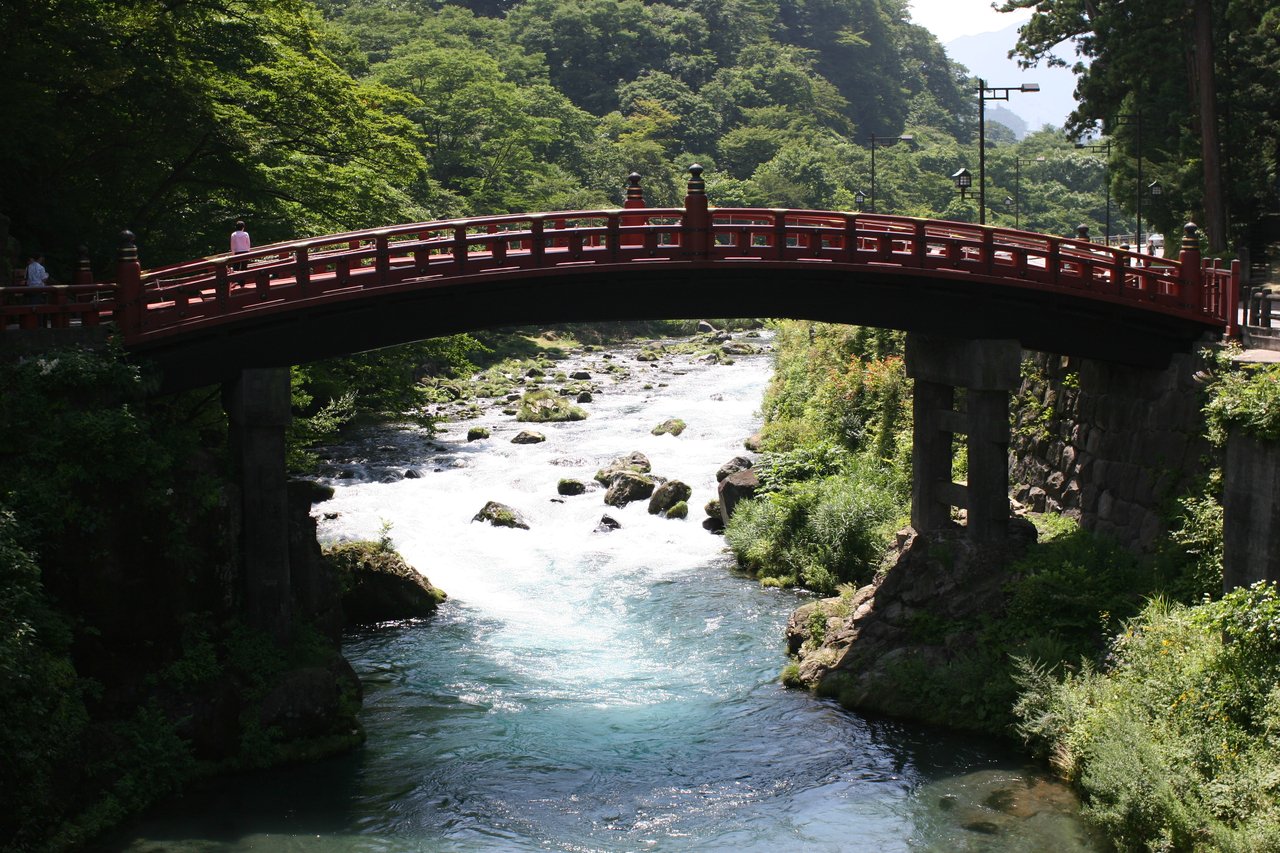
Sightseeing included Akihabara, Shinjuku, Tokyo, Nodashi/Atago, Asakusa, and Nikko.
This year’s Bujinkan theme is Kukishin Ryu, and each class incorporated some level of training within it. One Shihan showed the complete Sabaki & Okuden Gata over the course of two classes. Hatsumi Soke focused quite a bit on “demon’s play”.
Hatsumi Soke mentioned “collecting kata” and the dangers of this behavior. In year’s past, certain Bujinkan members were known for collecting as many kata as possible. In doing so, they would never train long enough on any given kata, and instead, would just try to build their personal kata collection. Soke has said in the past, and this year was no exception, that collecting kata is like training in a dead martial art. We should train hard to learn the basics of the kata so that at some point, we can leave them behind. When done in this way, the principles of the kata stay with us, and we aren’t hindered by “performing” or “collecting” kata, allowing for free movement based on the situation.
Soke shared many applications of Kukishin Ryu. Fingers in the eyes, multiple strikes to the face, neck, and head, and allowing techniques to “be born from the divine” were examples of demon’s play. At one point, Soke nonchalantly controlled, then detained three different uke (Shiraishi Sensei, Yabanaka-san, & Shawn Gray) at the same time, placing pressure on one person to create a reaction that would lead to discomfort for the other two uke. It looked like Soke was playing with Play-Dough, albeit the human kind. Soke said that it was important to move in ways that the uke can not mentally keep up, like a demon.
Soke showed many methods of controlling an opponent using nage waza (throwing techniques). At one point, Soke completed a technique and said, “This was the feeling of shiho nage, of shiho dori”. Doug Wilson (translator) & Pete mentioned that usually the “shi” of shiho means four directions, and can mean all directions, but Soke was saying it in such a way to mean infinite. The difference being that “all directions” has a direction, while “infinite” does not.
During one session, thoughts were shared about Bujinkan etiquette and training methods. The importance of staying true to Bujinkan Budo Taijutsu and Soke’s themes of study was talked about. Teaching under the Bujinkan name requires permission from the Bujinkan Hombu and membership with the Shidoshi Kai (teacher’s guild) for all teachers. All students should have membership cards. Training should be rooted in the kihon (basics), but methods that incorporate resistance, sparring, grappling or training with other teachers within the Bujinkan community are all okay. Of these, the sense of community within the Bujinkan is a very important aspect of training, and one that all students should be a part of. However, if a student of the Bujinkan chooses to train with former Bujinkan students, teachers or associations, they would not be following the path set forth by Hatsumi Soke. As students of a Japanese martial art (and a liberal one at that), there are aspects of Bujinkan training that is deeply rooted in Japanese culture, tradition, respect, and courtesy. As students of the Bujinkan, there may be cultural differences that cause conflict with the way we understand certain things handled in the Bujinkan. As it was explained in class, looking to non-Bujinkan sources (such as the internet or non-Bujinkan associations) for Bujinkan training guidance is contradictory to accepting the current training path set by Hatsumi Soke and the Bujinkan. It is important to speak with a Bujinkan Shidoshi, Shihan, or the Hombu concerning questions or clarification about this manner.
Nagato Shihan spent time speaking with us about sente (先手), or the concept of striking first. Also, Nagato Shihan mentioned about the idea of training only on one side during practice. Through an interpreter, he said that if you are training a kata or waza on both sides (both left and right), you are effectively cutting your training time in half. Rather, it would be better to spend your time training the kata or waza on only one side of your body until you get it. Once you know it, then the other side should be able to do it naturally. Nagato Shihan pointed out that some of the written densho in the Bujinkan only refer to practicing on one side.
Noguchi Shihan showed ways of taking an uke nagashi (receiving strategy, specifically for dealing with a punch or kick) in the Kukishin style. It should be hard hitting at the joints to affect the structural balance of the body.
Charles Gelm and Chris Parrett passed their godan tests.