Blog: Long Weapons Training
Today we completed a cycle of training sessions with long weapons, specifically the bisento, naginata, and yari. Sometimes we are asked why one should train with weapons no longer used in modern warfare. For an answer, we gain inspiration from an experience in Japan during the late 1990s in which a Japanese Shihan, teaching us outside, asked a member from our group to "show your taijutsu" (an unexpected test) and threw him a rokushakubo. The student performed a number of strikes and waza with the wooden bo, including ukemi, in solo fashion (no uke). At the end of it, the Japanese Shihan said "Good, your taijutsu has improved." This perplexed a few of us younger practitioners in attendance, too naive to realize that the Japanese Shihan used the bo staff as a way to judge whether or not the posture, footwork, and flow of the student's taijutsu had improved since his last visit.
Just like a bisento, naginata, or yari, the rokushakubo (6 ft staff) amplifies any faults or poor posture if the student has clumsy taijutsu, bad habits, or tries to mask their faults. It exposes everything. And so, by practicing long weapons, it's an opportunity to test our resolve in training, identify our weaknesses, and re-ignite the heart and spirit of our movement to improve, similar in a way to the mirror on a kamidana reflecting back at practitioners their true "self" (strengths and faults) during class bow-in.
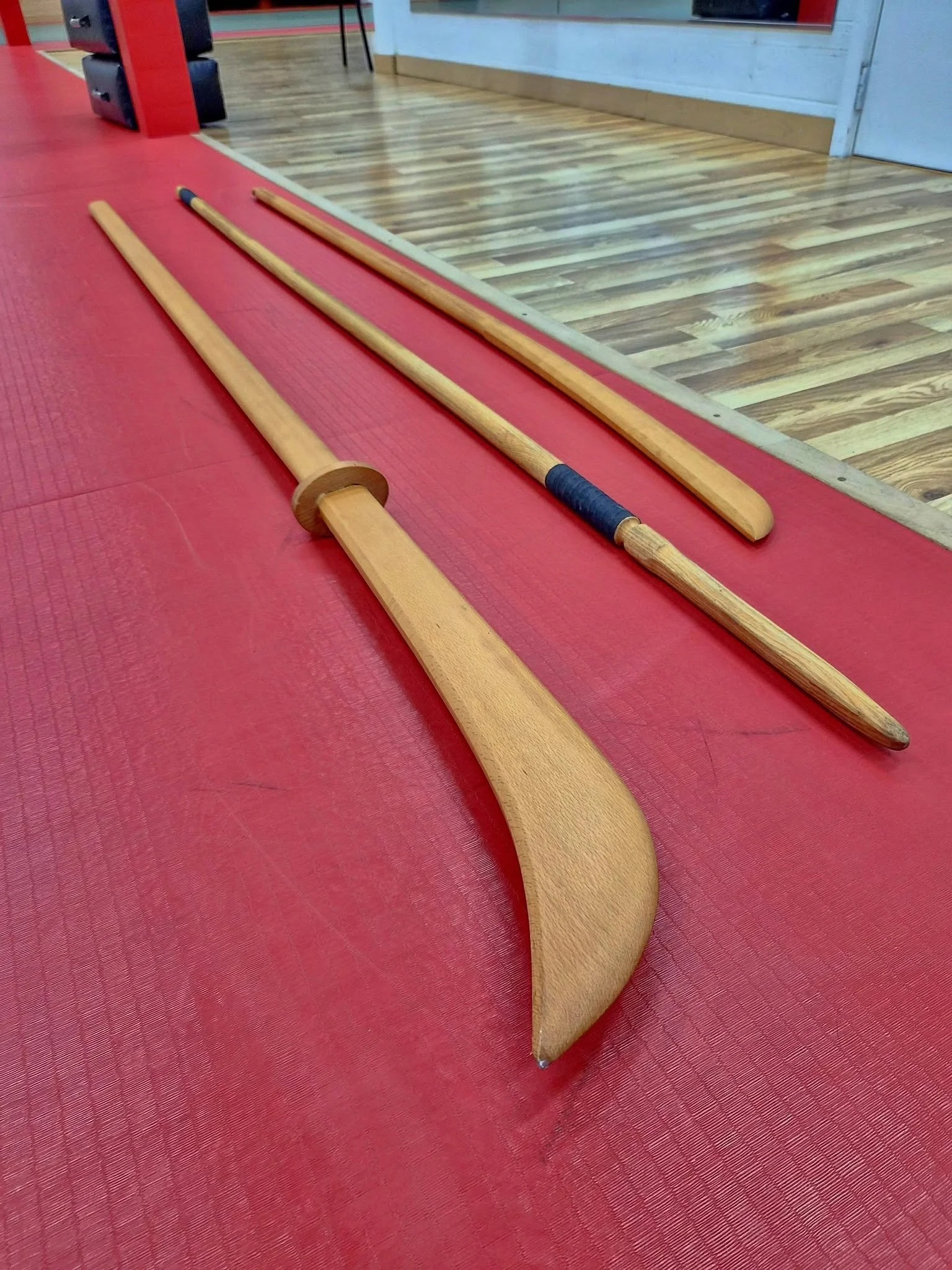
In addition, today's class was uniquely special, as our buyu brought custom training weapons for us to inspect and train with, gaining insights into the weight and balance, length, and footwork needed to make these long weapons work effectively. We also had a student don kendo gear and practice yari ukemi to allow for hard attacks (thrusts; tsuki) to the body, face, and neck safely. The bisento's size and weight made sure everyone used proper taijutsu!
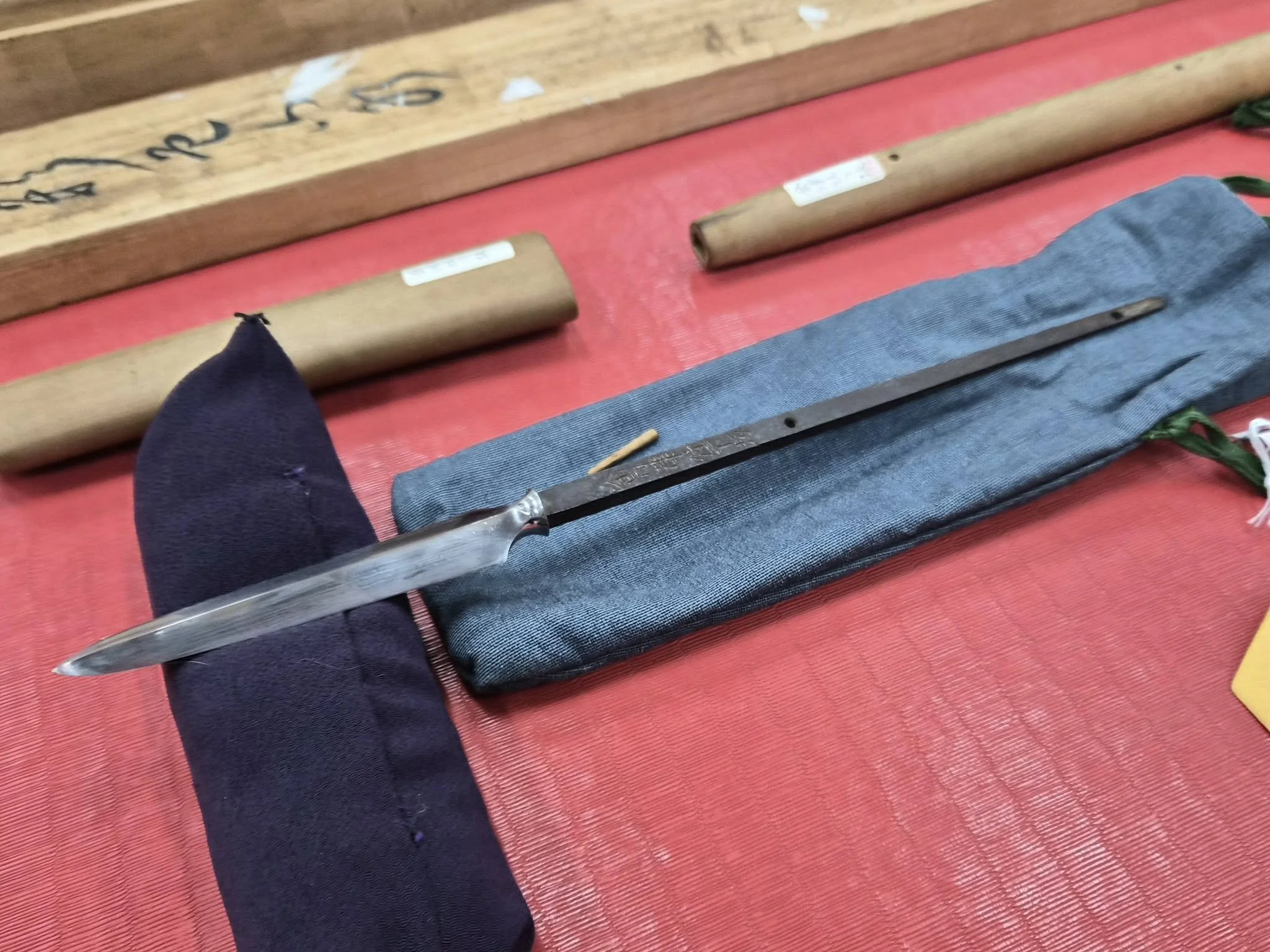
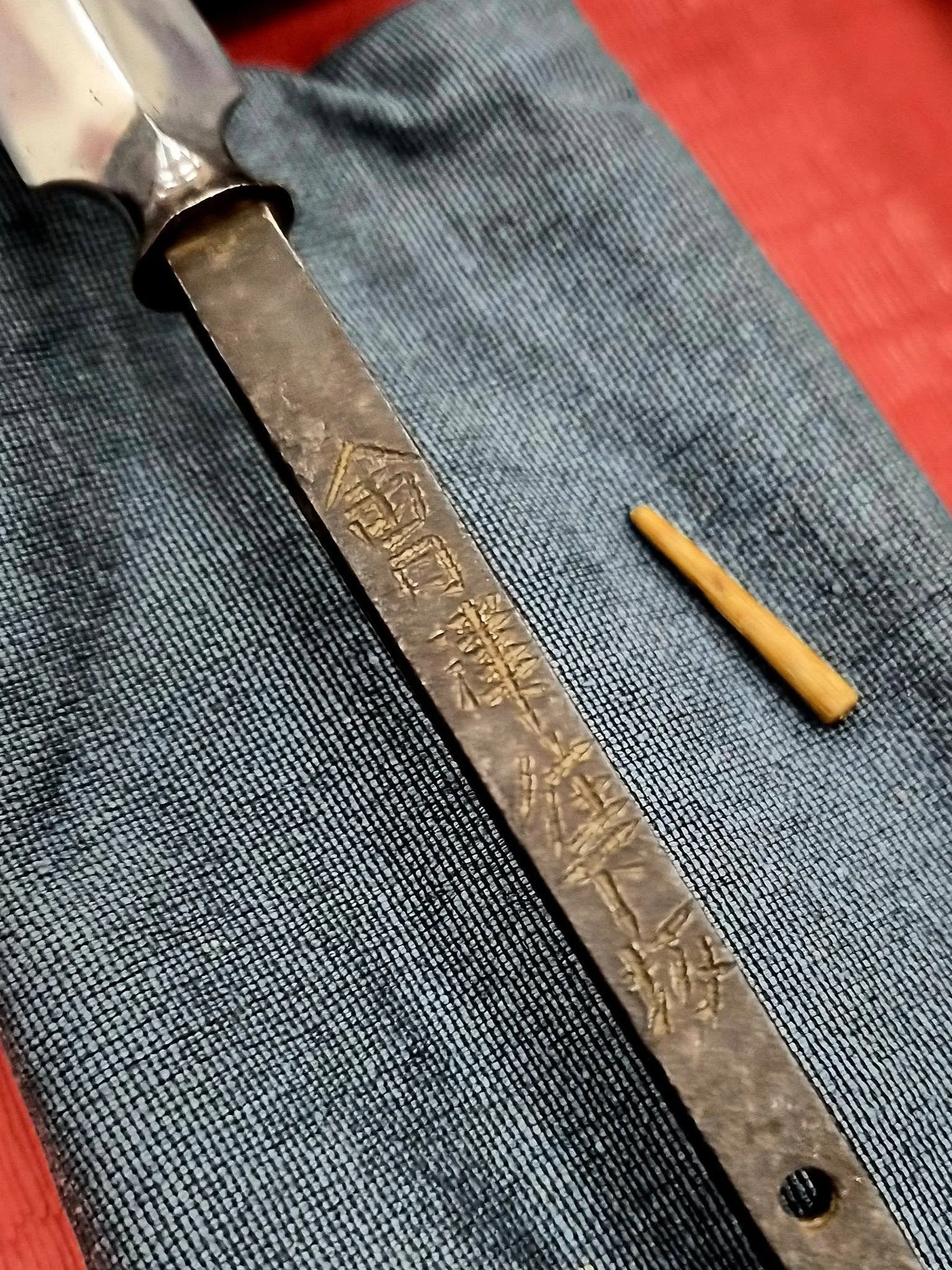
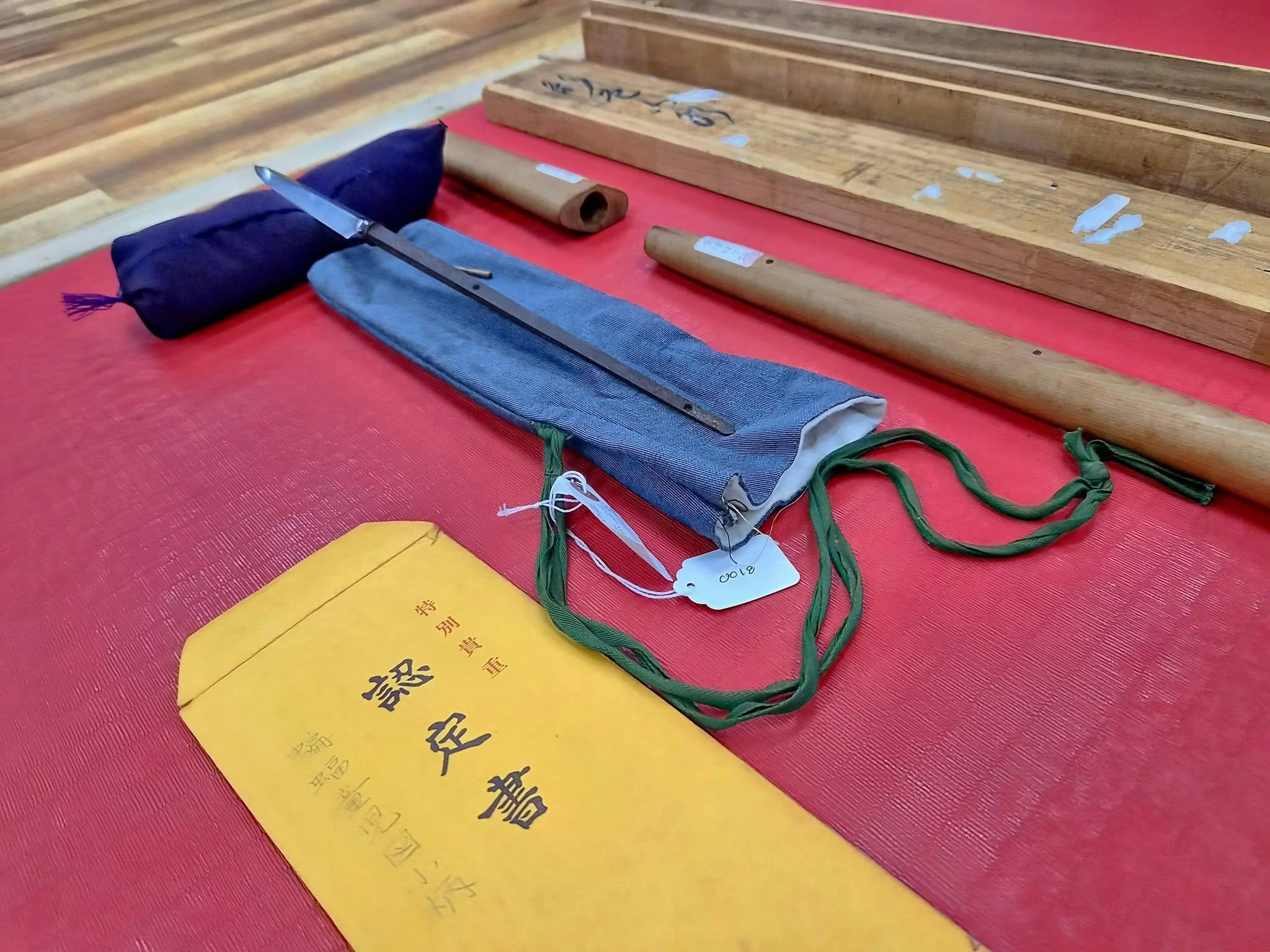
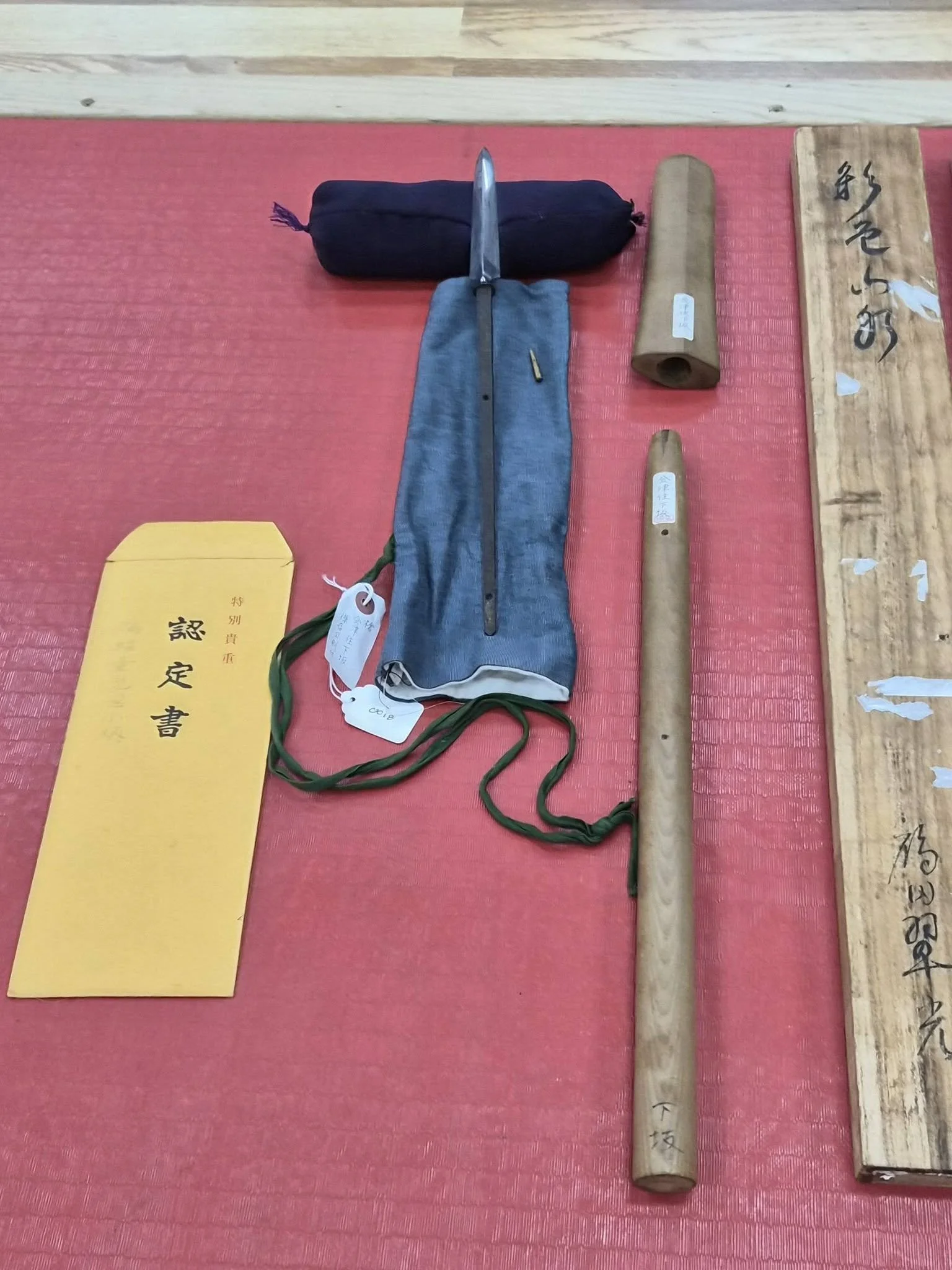
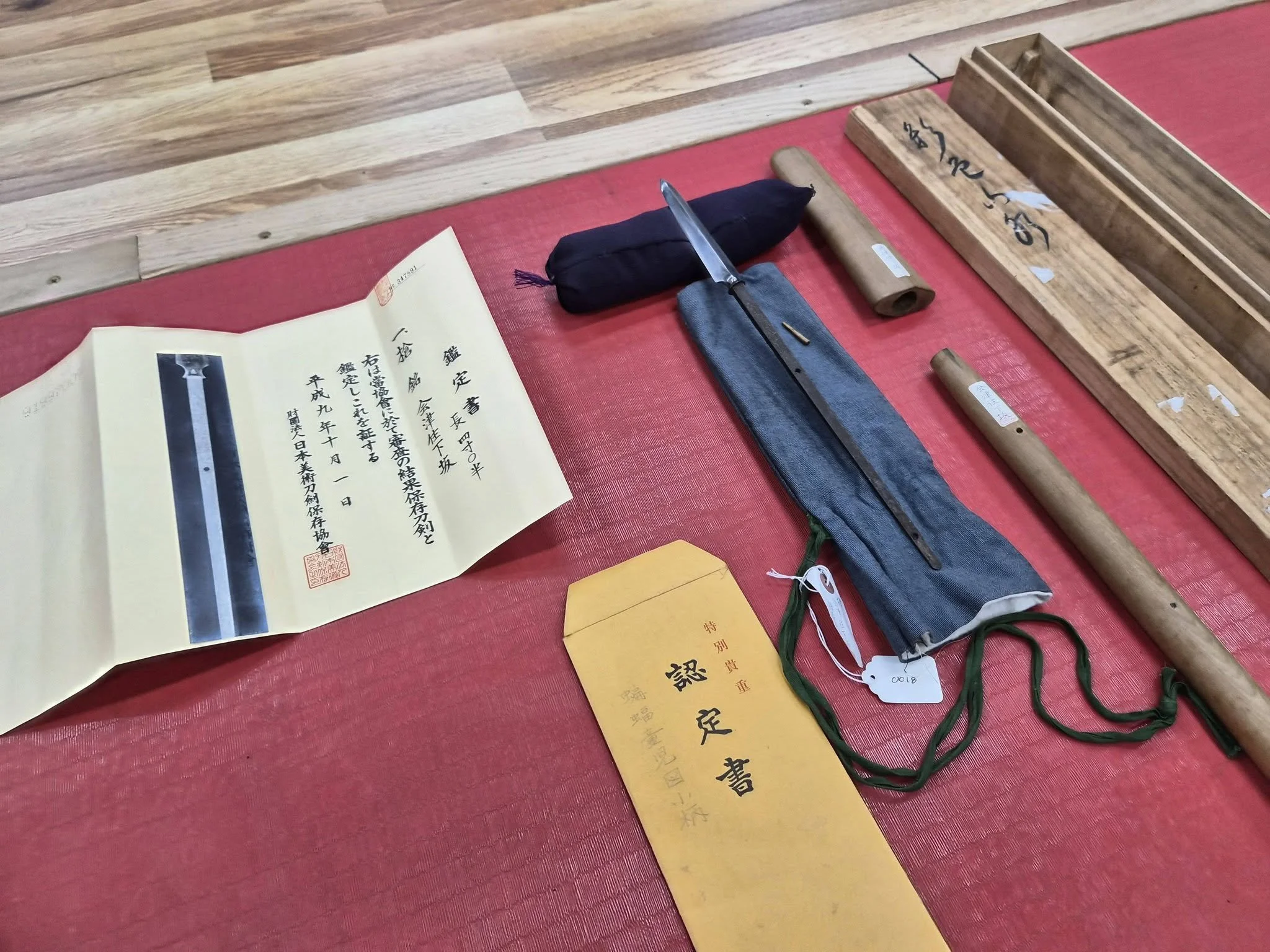
Pictures attached of the weapons used during today's training include the bisento, yari, and nagamaki. Also, we examined an authentic Japanese su-yari (straight spear) blade and its accompanying Kanteisho (appraisal certificate). The beautifully preserved ho (blade) features an inscribed nakago (tang) showing it was forged by the smith Aizu jū Shimosaka (会津住下坂).
Bufu ikkan!