Blog: 2010 Japan Trip - March
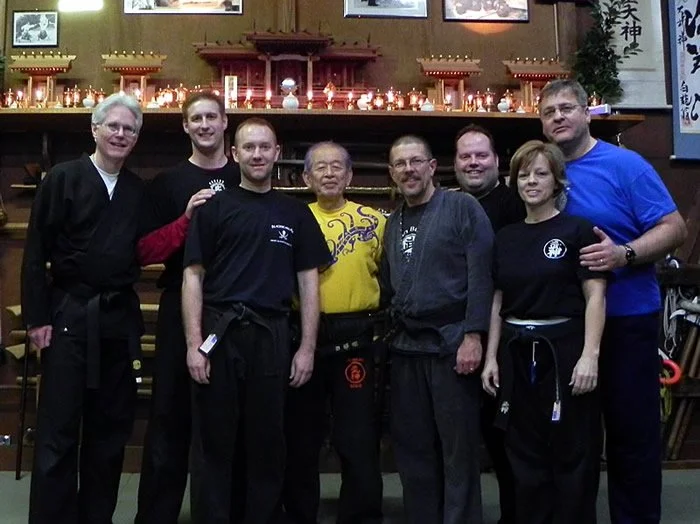
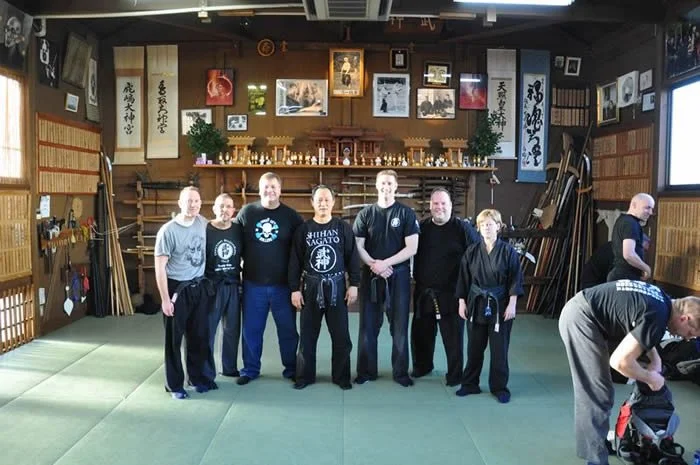
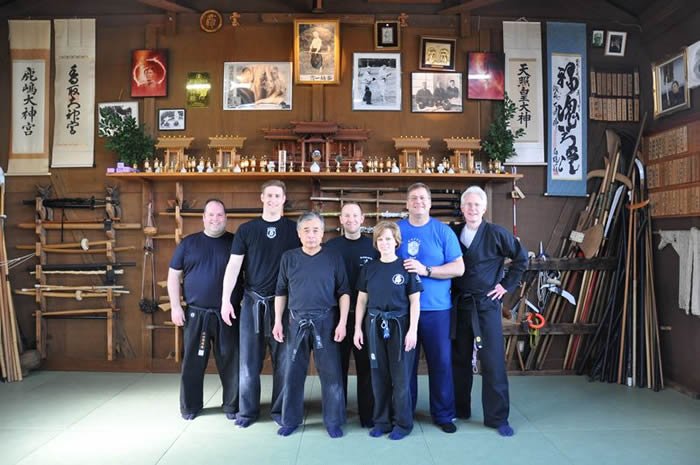
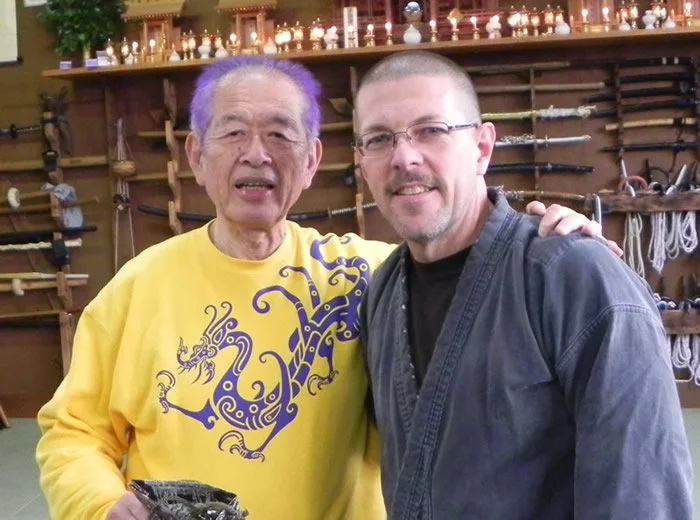
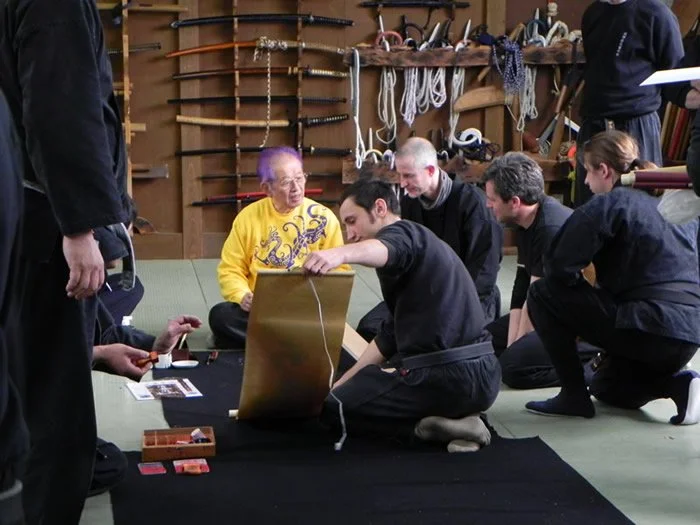
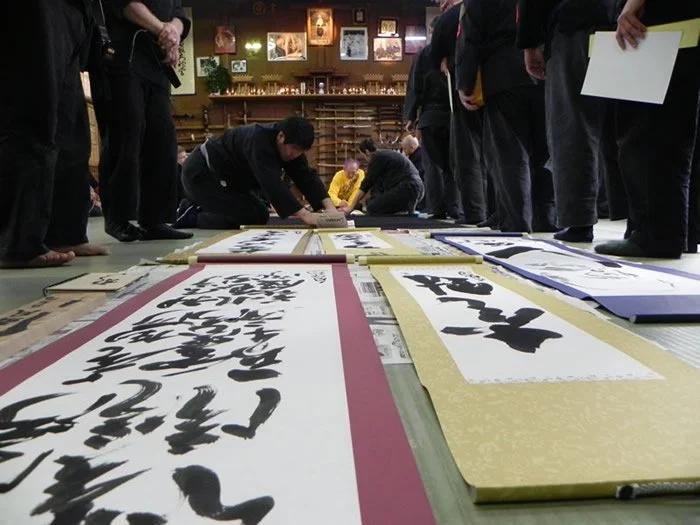
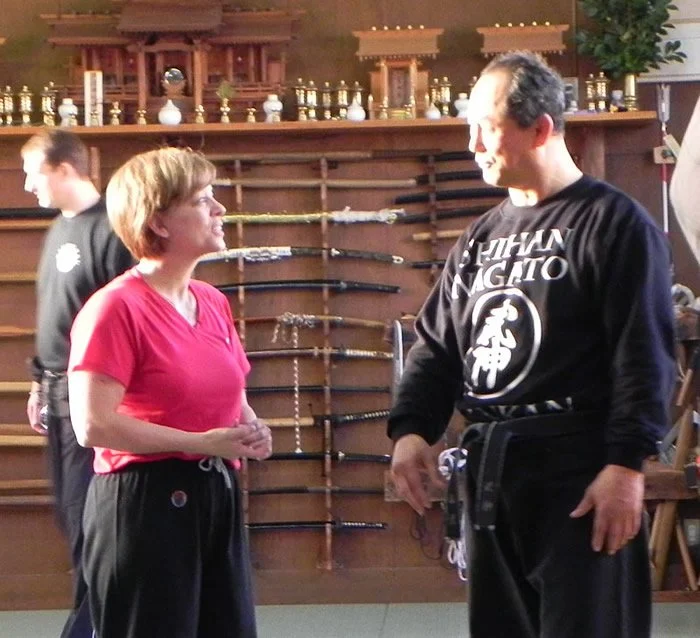
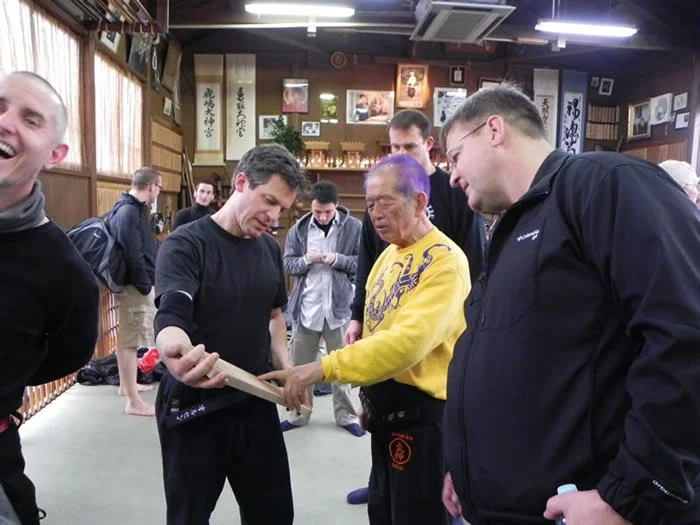
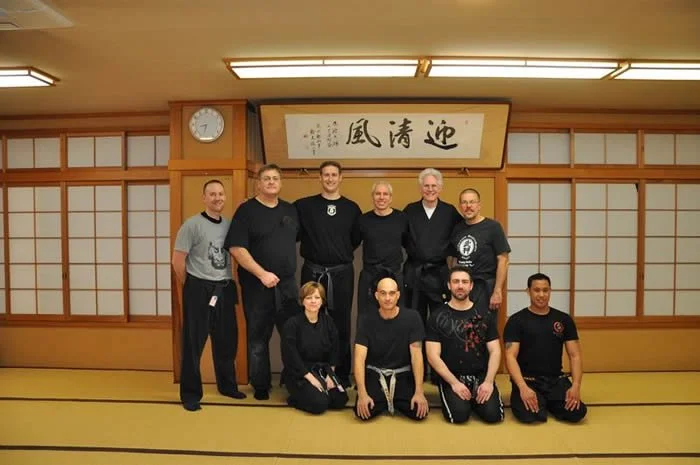
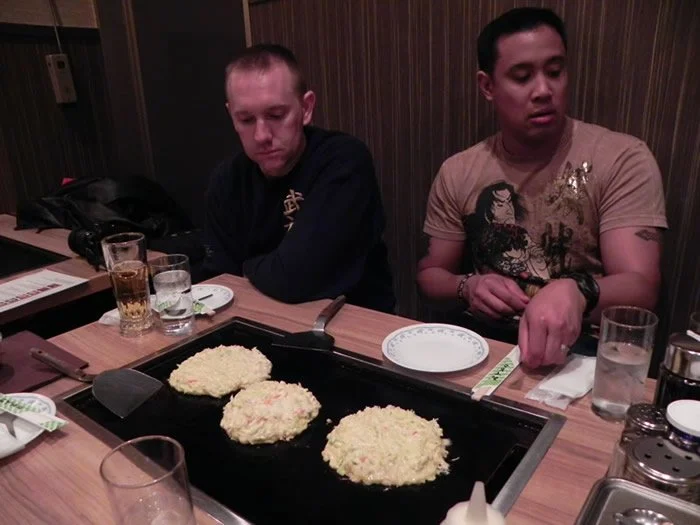
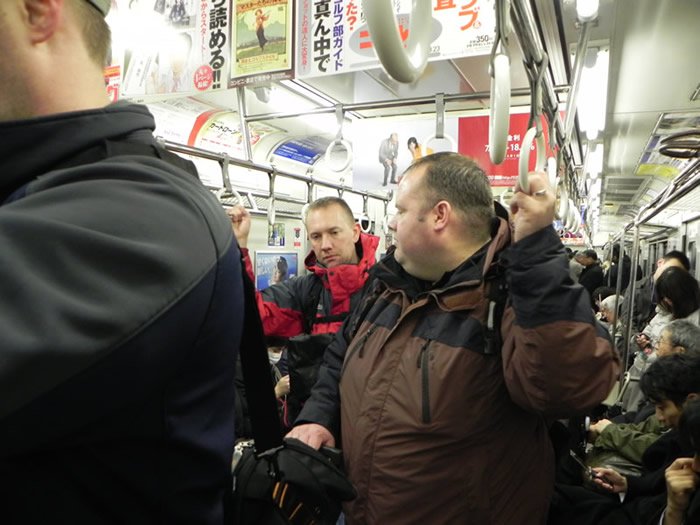
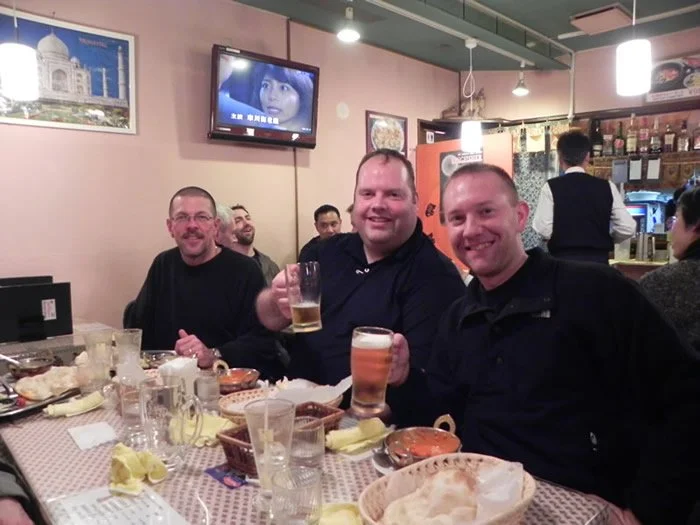
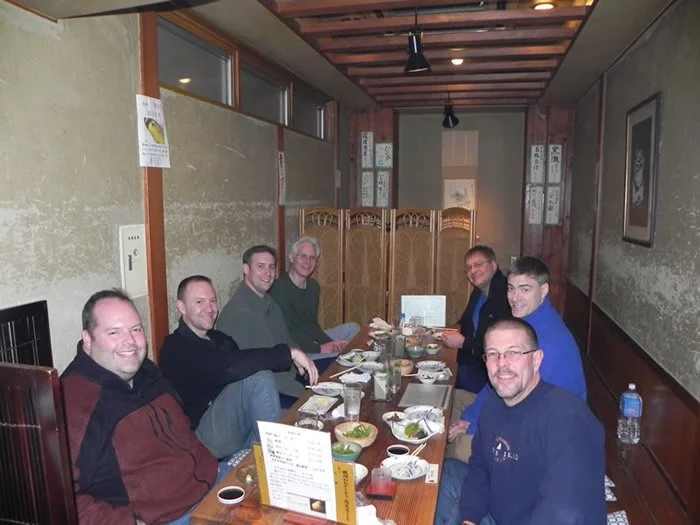
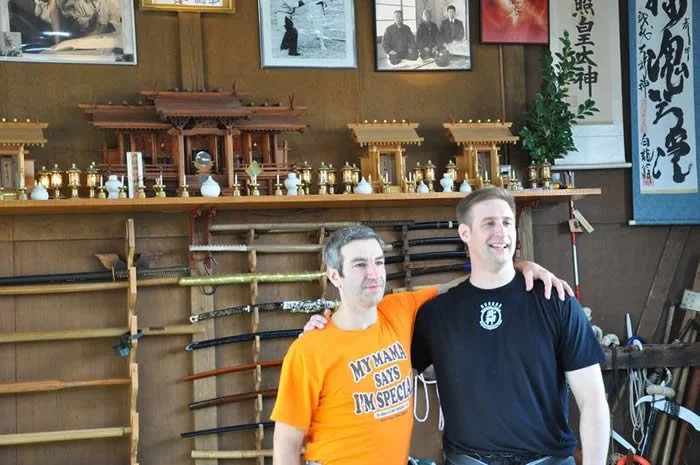
Members from the Dayton Bujinkan Dojo visited Japan for training and sightseeing in March 2010. Below are photos and summary notes from trip.
(The following post is a condensed version from Jeff’s full, detailed trip journal.)
We experienced three seasons of weather: snow in the beginning of the week, 50‟s and rain in the middle of the week, and 70‟s and sun by the end of the week.
Over the course of the week, we had three sessions with Hatsumi Soke, three sessions with Nagato Shihan, and four sessions with Noguchi Shihan, along with a few sessions with Shiraishi Sensei, Duncan Stewart and Pete
Reynolds.
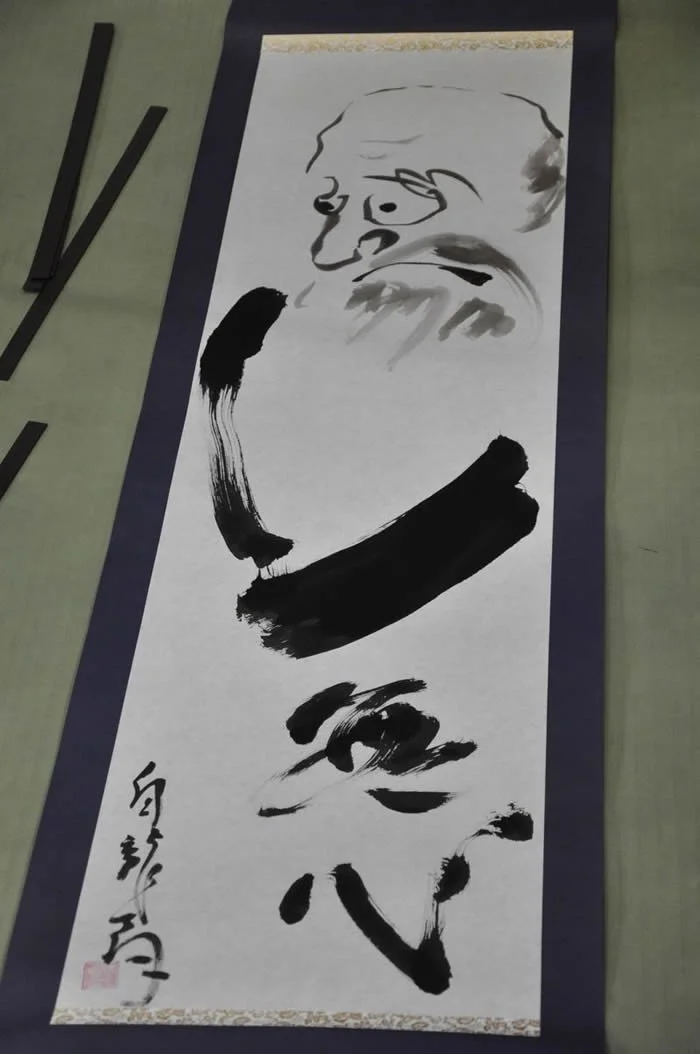
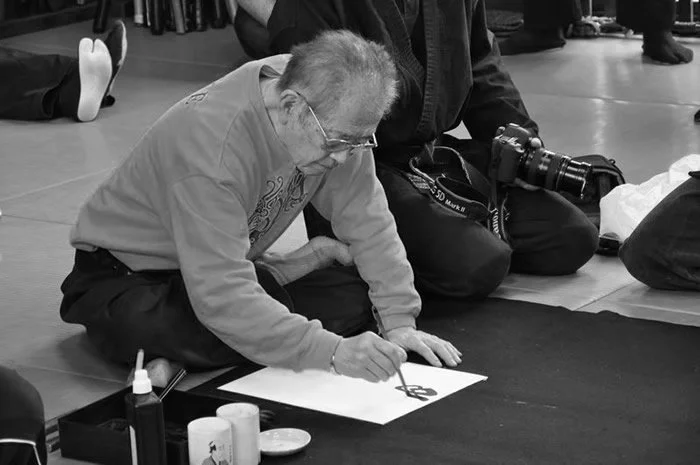
This year‟s Bujinkan Hombu theme being explored by Hatsumi Soke in Japan is Rokkon Shoujou (禄魂笑浄). The gist of what was explained to us in class was the (loosely translated) idea of “purifying the senses through laughter‟. Physically, the Rokkon Shoujou theme was explored by Hatsumi Soke through his Budo Taijutsu and various Tachi waza.
Looking at recent year’s themes, you can see a pattern of Soke using Japanese history as a method of exploring budo concepts. He has mentioned studying weapons and tactics from such periods as the Edo Era (江戸時代; 1603-1868), the Sengoku Jidai (戦国時代; roughly 1470‟s to 1615), and the Muromachi Jidai (室町時代, 1333-1573) of Japan‟s history. The tachi seems to be a natural extension of using older weapons to study budo.
Methods of practicing with the tachi were expanded upon by different instructors throughout the week. In one class, the idea of using San Shin movement, and understanding the differences & similarities of the Shoshin no Kata & San Shin (Go Gyo) no Kata, were hypothesized as a method to know the type of weapon and its era of use.
Noguchi Shihan spent time showing examples of movement from the Koto Ryu‟s Shoden & Okuden Gata along with the Kukishinden Ryu & Takagi Yoshin Ryu.
Nagato Shihan seemed to emphasize the covering of the hands and hiding the striking side of his techniques so the opponent had difficulty seeing or blocking his actions. Kyojitsu (truth & falsehood) was a theme thrown out for us to consider on more than one occasion.
David VandenBos took and passed his Godan (5th Degree) test.
Soke is no longer teaching. He is showing us the potential of what we may experience if we continue to train. By training diligently in the San Shin, Kihon Happo, and Ryuha Kata, our Budo Taijutsu will evolve naturally.