Blog: 2010 Japan Trip - Dai Komyo Sai Celebration
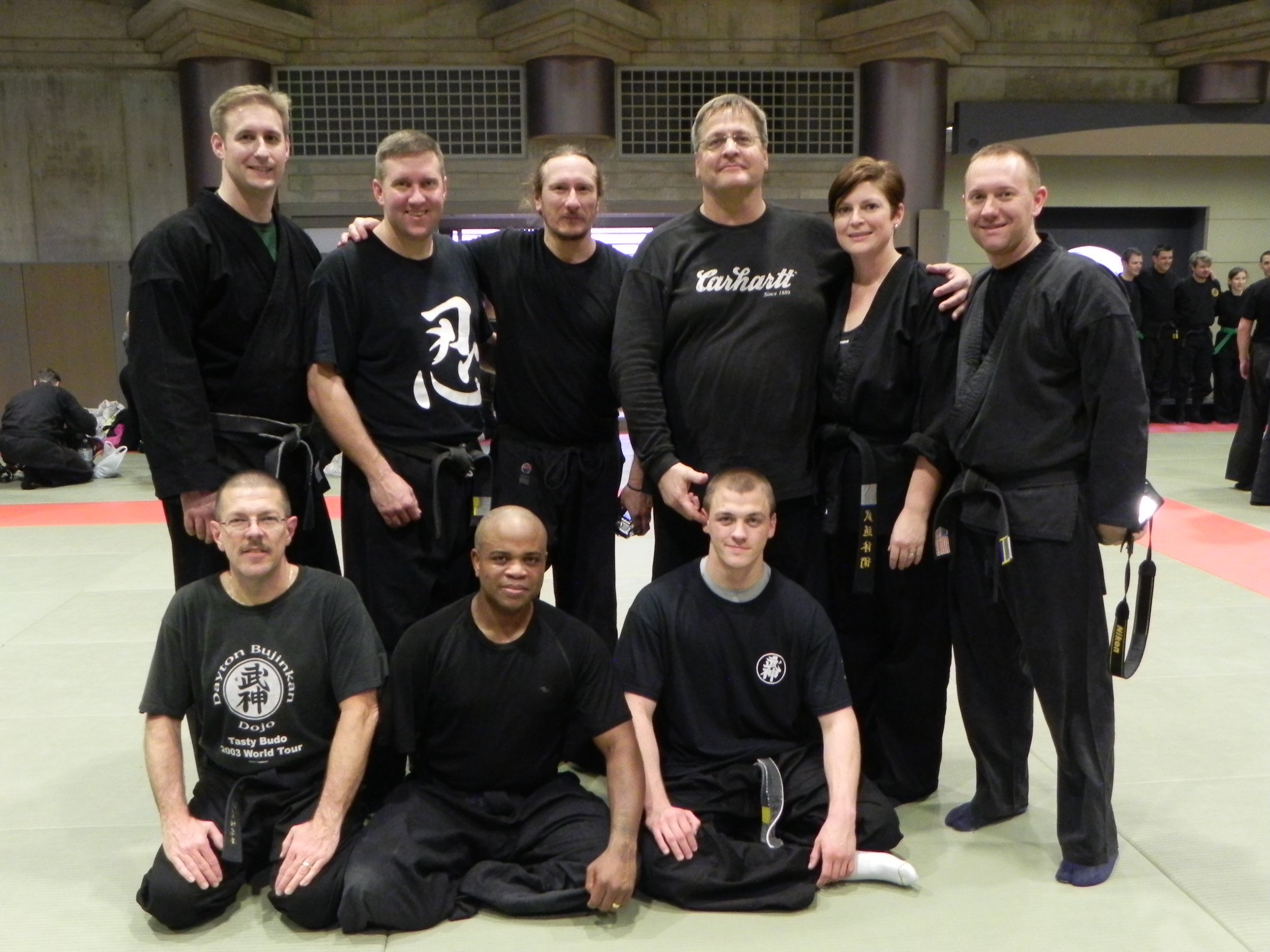
Members of the Dayton Bujinkan Dojo attended the December 2010 Dai Komyo Sai in Japan, celebrating Hatsumi Soke’s birthday. More than 400 practitioners attended globally. Notes from the trip are below. Additional photos from the trip are available at https://www.daytonbujinkan.com/photo-gallery-i/2010-japan-trip.




(The following post is a condensed version from Jeff’s full, detailed trip journal.)
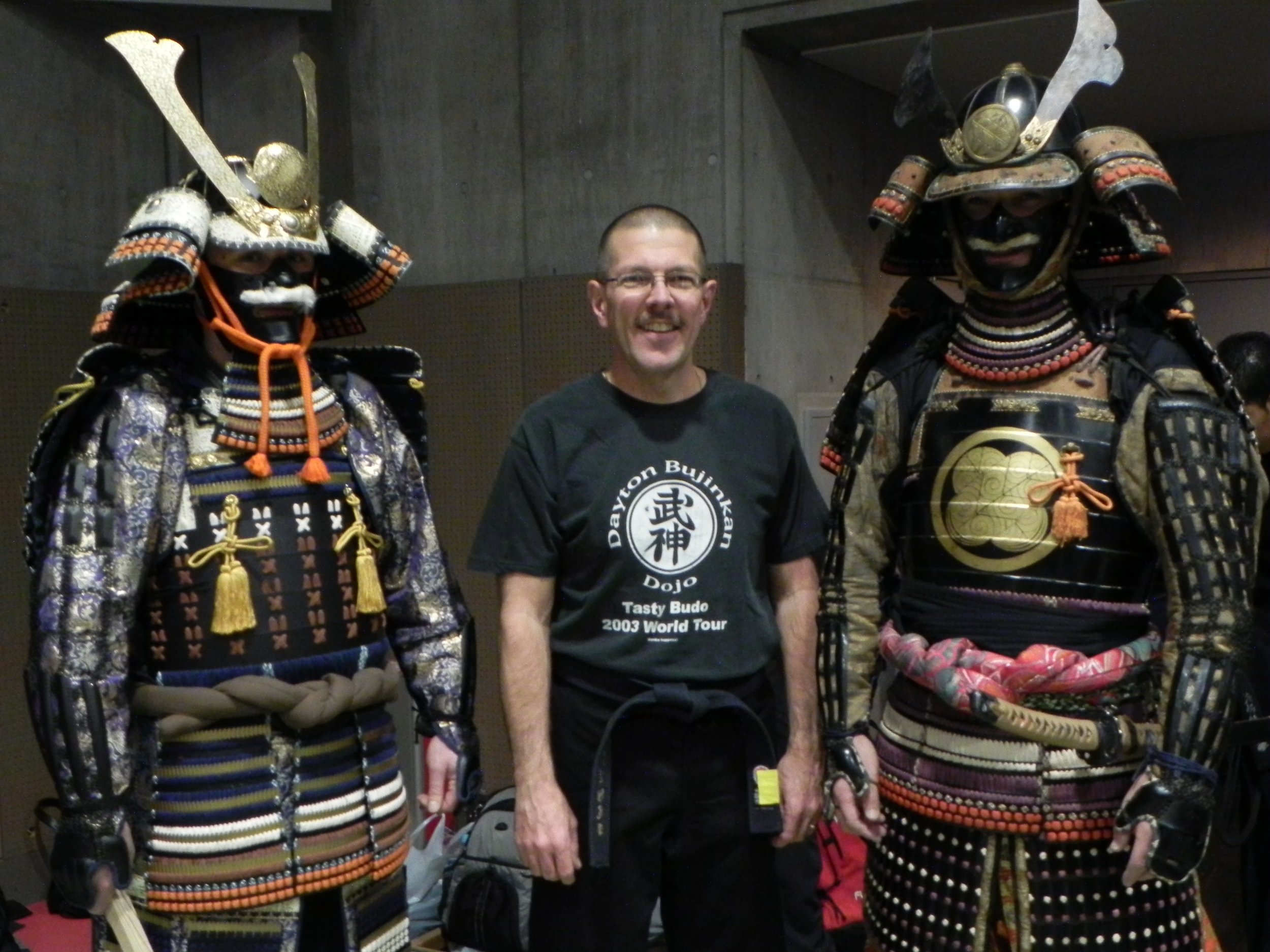
“Hiai!!!” Two of Soke’s senior foreign students stand in Hira no Kamae in full armor (yoroi) and kiai at each other. Immediately they clash together in kumiuchi and start grappling. One pulls, the other pushes. A punch is thrown. Jodan uke, then an attempted nage. The throw fails, but in the mayhem, the kabuto (helmet) of one of the students is displaced, allowing the other student to take advantage of this and throw his opponent to the ground. Soke comments “don’t give up, keep going!”. The translators tell both students not to stop, even if thrown. Fight to the end. Realizing this, both students suddenly add intensity to the randori or free response. Neither quits when thrown or misbalanced. They attack each other with everything. Part of the armor begins to shred, loosening a sode (shoulder plate), a leg guard, and an obi (belt). For more than five minutes, both students continue to grapple and punch back and forth. Then, in a moment, a helmet comes off. Wack! The student takes the helmet and swings it at his opponent. Using the momentum gained from the strike, he applies ude ori (arm bar). “Ok!” Soke says, as 400+ people applause the demonstration they just witnessed. The two students performing randori, Duncan & Holger, are sweaty and exhausted. And so begins the second day of the 2010 Dai Komyo Sai in Japan….
The 2010 Dai Komyo Sai (DKMS) seminar was held in Ayase, Japan to celebrate the beginning of Hatsumi Soke’s 80th year (79th birthday). The Bujinkan theme for 2010 is the concept of Rokkon Shoujou (禄魂笑浄), mostly explored through the use of a tachi, a long curved sword hung from the belt. Soke started the DKMS wearing full armor (yoroi). He also had Noguchi Sensei, Nagato Sensei, Seno Sensei, Someya Sensei, Duncan Stewart and Holger Kunzmann wearing yoroi during the first two days. The third day of the event was done without yoroi. More than 400 people attended the event – officially, attendee receipts were as high as 485. Students came from across the globe to attend, including the US, UK, Australia, France, New Zealand, Spain, Germany, Norway, Venezuela, Canada, Russia, Mexico, Italy, Finland, Switzerland and Japan.
Soke began teaching the first day emphasizing the importance of not applying a technique. Instead, control the opponent and take advantage of the space, timing, and rhythm of what they are doing. This allows you to be uncommitted, but still have the ability to benefit from any situation. Soke used Duncan as uke. Duncan’s yoroi was used against him many times. At one point during a technique, Soke used Duncan’s helmet, which had been dislodged, to grind into his menbu (face/forehead). Duncan had multiple abrasions on his face for a few days afterwards. Duncan spoke about the difficulty of taking ukemi when wearing yoroi, and the lack of vision or awareness that must be overcome because of it.
During one set of waza, Soke explained the realization that the fighting styles we were practicing come from a much earlier era than other martial arts. The Bujinkan ryu-ha are based on earlier era of budo such as the Muromachi Jidai (室町時代, 1333-1573). Understanding how to fight in armor, and how to defeat someone wearing armor is based on this time period.
Soke spoke about understanding of goshin as being about the five weapons: the ken, tachi, ju (guns), katana and nuclear weapons (kaku). Over time, the history of war has included all of theses weapons, starting as early as the Muromachi era and before.
Kevin Dunsky passed his godan test.
On the last day of training, during the last session, Soke began teaching the kihon happo. He had different Shihan show one of the core eight waza that make up the kihon. Rumors are the 2011 theme is Kihon Happo, albeit with a twist on the kanji.